
4 Takeaways From the NCAA Men’s Basketball Tournament Elite Eight
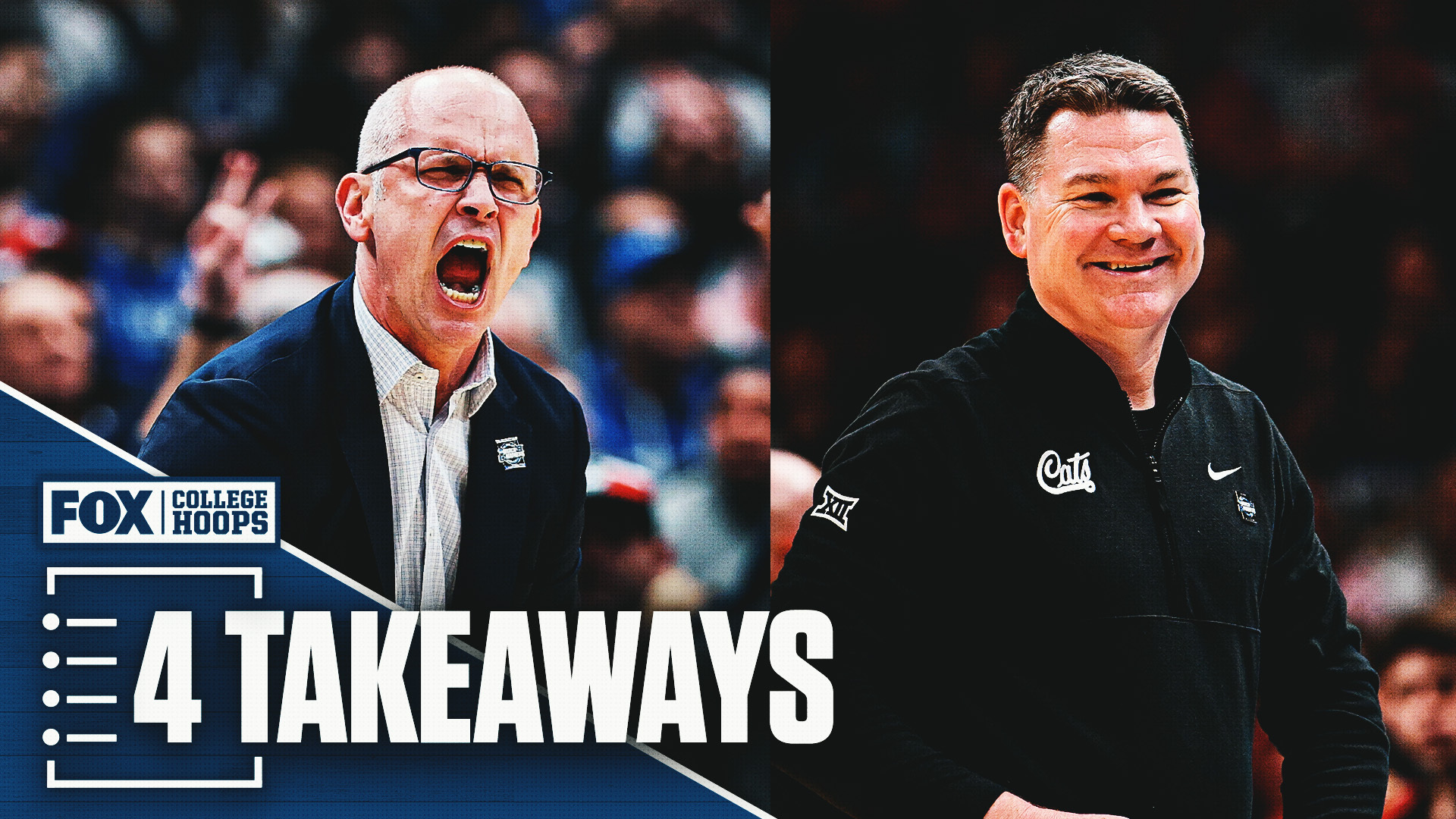
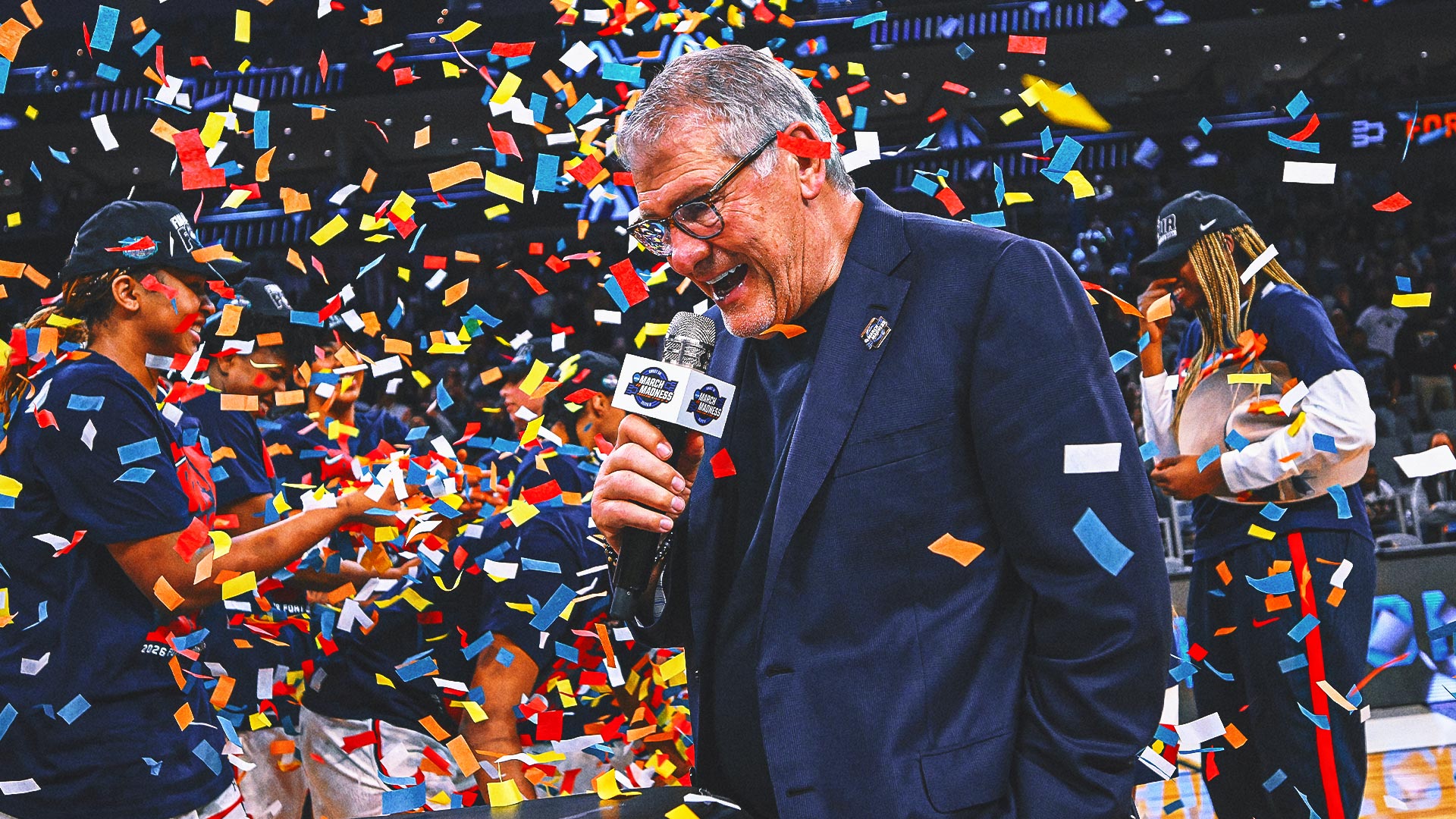
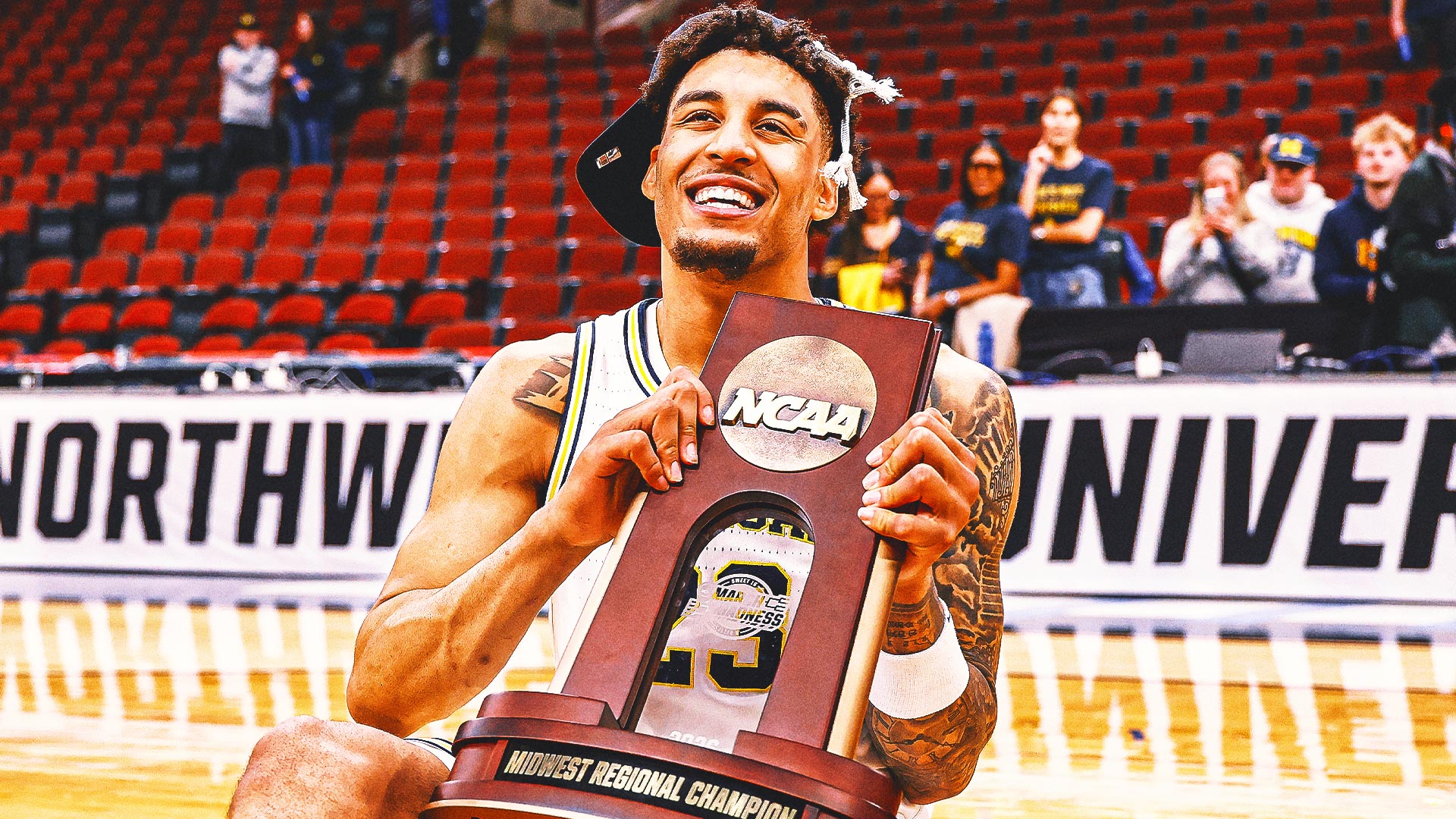
As the final seconds melted away in Sunday evening’s Elite Eight showdown between No. 2 UConn and top-seeded Duke, it began to feel like the frantic comeback orchestrated by the Huskies, who trailed the Blue Devils by 19 in the waning moments of the first half, would fall mercilessly short.But then, as if pulled from a fairytale ending nobody saw coming, an attempted jump pass by Duke guard Cayden Boozer was tipped near midcourt and recouped by counterpart Braylon Mullins from the Huskies. Mullins dished to forward Alex Karaban along the right wing with the clock evaporating. Karaban flipped it back to Mullins, the true freshman sharpshooter who’d missed seemingly everything he launched for the first 39 minutes against Duke. Now, Mullins had no choice. He hoisted from several feet beyond the logo.With the ball still in flight, Mullins began backpedaling as his desperation heave arced beautifully, poetically, parabolically toward the hoop. And when it swished softly through the net with 0.4 seconds remaining — thrusting the Huskies in front for an improbable 73-72 win that ranks among the greatest comebacks and moments in program history — Mullins was already beyond midcourt, closer to the despair and desolation being exhaled by Duke than the riot that exploded along the UConn bench. Just like that, the Huskies were heading to the Final Four for the third time in four years. Just like that, UConn had authored an all-time NCAA Tournament moment. Here are my takeaways from the Elite Eight: 1. Pursuit of history continues for UConn under Dan Hurley [MEN’S BRACKET: NCAA Tournament Bracket, Leaders & Stats] After UConn won back-to-back national championships in 2023 and 2024, which moved the Huskies into a tie with North Carolina for the third-most titles in college basketball history (six), the long and arduous quest for a three-peat fizzled almost from the start. By late November of last season, Hurley’s team had already lost three consecutive games at the Maui Invitational, where his sideline antics became a national storyline. By late February, the Huskies were 10-6 in Big East play, trailing St. John’s and Creighton in the conference’s pecking order. By mid-March, they’d flamed out of the Big East Tournament with a loss to the Bluejays in the semifinals. And by the Round of 32, only a few days after the Big Dance began, UConn fell to No. 1 seed Florida, who went on to win the whole thing. Facing an offseason heavy with introspection, Hurley responded the only way he knew how: rebuilding and retooling the Huskies into a better version than what they put on the floor last season. He added a high-level transfer guard in Silas Demary Jr. from Georgia. He signed two instant-impact freshmen in Mullins and Eric Reibe, both of whom were McDonald’s All-Americans. He dared veterans like Karaban, guard Solo Ball and center Tarris Reed Jr. to become the dominant forces their predecessors had been when UConn cruised to consecutive titles. He plucked a well-respected assistant coach from Villanova in Mike Nardi. At first, the pieces all seemed to fit together beautifully. The Huskies opened by winning 22 of their first 23 games despite injuries to Reed and Mullins. The first and only team to beat UConn before February arrived was Arizona, which will join the Huskies in Indianapolis. But Hurley’s team suffered four defeats in the span of five weeks to choke away both the Big East regular season title and any chance of winning the Big East Tournament, both of which were claimed by St. John’s. When the Huskies were revealed as a 2-seed on Selection Sunday, it was easy to doubt their chances of making another lengthy run. Nothing about the preceding few weeks suggested more March magic would happen — until, of course, it did. UConn began by beating No. 15 Furman and No. 7 UCLA to reach the second weekend. Then, Hurley’s team fended off No. 3 Michigan State in a Sweet 16 brawl between two of the toughest programs in the country. Simply reaching the Elite Eight felt like an accomplishment for a team that never quite regained its early-season form. The 19-point deficit in the first half against Duke on Sunday seemed to finally mark the beginning of an unsightly end, especially when considering that 1-seeds entered the day 134-0 in games they lead by 15 or more points at halftime. “I just thought to start the game we were a little bit on our heels,” Hurley said at the postgame news conference. “I thought we were too defensive defensively. We didn’t get after them and try to pressure them or make them uncomfortable. I just think that we probably gave a little bit too much respect to their individual players.” History, however, didn’t account for an onslaught of 3-pointers in crunch time after the Huskies missed 18 of their first 19 from beyond the arc. Nor did it consider what might happen if Duke turned the ball six times in the final 9:58. And history certainly didn’t remember that UConn has been the sport’s most successful program over the last quarter-century, winning all six of its national titles since 1999 — one more than the Blue Devils possess in their entire trophy case. All of which set the stage for Mullins to do what Mullins eventually did on Sunday night. And now UConn is still alive to chase its third championship in the last four years. “That game was a reflection on the season,” Hurley said. “It’s been a season where we’ve dealt with injuries to key players at critical points of the year that we’ve had to overcome, and we’ve had to show a lot of fortitude and resilience and just kind of claw our way through the season. The game was a microcosm of that: We fought, we clawed, put ourselves in position to take advantage of a mistake that they made. “And one of the most brilliant shooters you’ll ever see shoot a basketball made an incredible, legendary March shot.” 2. Michigan star Yaxel Lendeborg reaches new level in postseason Michigan forward Yaxel Lendeborg was already entrenched as one of the best players in the country long before this year’s NCAA Tournament began. The high-profile transfer from UAB entered Sunday’s game averaging 14.9 points, 7.0 rebounds and 3.3 assists per game for a team that won the Big Ten regular season title by four games. He was named Player of the Year in the conference and also earned consensus first-team All-America honors. He is a surefire first-round pick in the upcoming NBA Draft. So for Lendeborg to play well during the Wolverines’ dominant run to the Final Four, a journey that was crystalized with a 33-point blowout of No. 6 Tennessee on Sunday, should hardly be considered a surprise. And yet, the heights he’s reached amid these last four games soar above and beyond what he’s previously shown on the offensive end of the floor: It marks just the second time all season that Lendeborg has posted at least four consecutive games with an offensive rating of 136 or higher, according to KenPom. Prior to his current tournament run, the only other time he accomplished that feat was during a six-game stretch in Michigan’s non-conference schedule from Nov. 4 to Dec. 6. “This was obviously one of the goals because of the talent we had in our locker room,” Michigan head coach Dusty May said in his postgame news conference. “There’s a slippery slope of being happy and content that we’re there, but also knowing you still have work to do for us to accomplish what could be. Our ultimate goal is to be playing [next] Monday.” To put this remarkable stretch in context, consider where Lendeborg’s offensive efficiency ranks on the national level. His individual rating of 154.5 since March 17 — the day that this year’s First Four began — is third in the country among players who logged at least 75 minutes since then, according to Torvik. Lendeborg trails Purdue guard C.J. Cox (155.5) and Nebraska guard Pryce Sandfort (155) in that category. There are only two other players whose offensive ratings even exceed 140 during the same time period. What was already a tremendous season for Lendeborg is entering a new stratosphere. 3. Arizona will have one huge statistical advantage in the Final Four There was something uniquely apropos about Arizona taking its first lead against No. 2 Purdue on Saturday night from the free-throw line, where guard Jaden Bradley made a pair with 14:34 remaining in the game, officially erasing his team’s seven-point halftime deficit. The Wildcats, who pulled away to win by 15, would never trail again. All season, head coach Tommy Lloyd’s team has thrived by attacking the rim in an era defined largely by 3-point shooting. Arizona scores more than 56% of its points from inside the arc, according to KenPom, which ranks 14th nationally and first by a landslide among teams in the Final Four. For Lloyd’s group, the natural byproduct of applying so much interior pressure is drawing fouls in large quantities, which translates to more free throws. Arizona shot 22 free throws against the Boilermakers, 39 against No. 4 Arkansas, 39 against No. 8 Utah State and 33 against No. 16 LIU. The end result? Ninety-nine points from the free-throw line across four games, compared to only 43 makes for the Wildcats’ opponents. “When you offensive rebound, you get fouled,” Purdue head coach Matt Painter said in his postgame news conference. “When you’ve got quick guards that can beat you, you get fouled. Go look at their free throws. This is the fewest amount of free-throws they’ve shot in a game in the NCAA Tournament so far. They’ve just lived in the paint. That was our concern.” It will be the concern of every team remaining in this year’s tournament, given how large the disparity is between Arizona and the rest of the field. Entering the Final Four, the Wildcats rank seventh nationally in free-throw rate, according to KenPom, which measures how often a team generates free throws. None of the other national semifinalists come close: Michigan is 100th, Illinois is 237th, UConn is 306th. If Arizona succeeds in winning its first national championship since 1997, an uncanny ability to generate free throws will be among the biggest reasons why. 4. Illinois and Arizona showcase college basketball’s international expansion In early February, Duke head coach Jon Scheyer granted me an interview for a series about what is, at least in terms of efficiency, the greatest offensive season in college basketball history. Teams across the country were scoring the ball easier, more frequently and in more ways than ever before, and I wanted to understand some of the rationale behind the ongoing explosion. One of the reasons Scheyer pointed out was improved roster building in an age when players are flooding the sport from every corner of the globe. “I think you have the ability to build around your best players in a different way,” Scheyer told me. “The pool is bigger. Instead of just being able to take high school players, you can take basically anybody in college, European, now the G-League potentially. It’s a hell of an opportunity as a coach. And obviously everybody has their own way of doing it.” Fast-forward to late March and the first two teams to qualify for this year’s Final Four — Illinois and Arizona — certainly have their own way of doing it. Both Lloyd and Illinois head coach Brad Underwood have stuffed their rosters with elite international talent that is ready and willing to trade lower-level professional experiences overseas for the chance to play collegiately in the United States. Consider the Illini, whose second-, third-, fifth- and sixth-leading scorers — Andrej Stojakovic, David Mirkovic, Tomislav Ivisic and Zvonimir Ivisic — all hail from Europe. The connection between Illinois and international prospects has grown so strong that memes portraying Underwood in traditional Eastern European garb are commonly shared on social media, including by the coach himself: Consider the Wildcats, whose fourth- and fifth-leading scorers — Ivan Kharchenkov and Motiejus Krivas — plus their most dynamic scorer off the bench — Anthony Dell’Orso — all came from outside the United States. Lloyd, now in his fifth season, learned the ins and outs of international recruiting during his two-decade stint as an assistant coach at Gonzaga. “I think college basketball, in the last two years, is at the highest level of performance that I’ve witnessed in my 50 years,” St. John’s head coach Rick Pitino said before his team’s loss to No. 1 Duke in the Sweet 16. “That’s because the foreign influence, they no longer want to go to the EuroLeague or the EuroCup. They want to go to the [United] States because they make more money. We can even rival the EuroLeague as far as pay is concerned. The way the game is being played on the court is the best I’ve ever witnessed.” 4½. What’s next? Here are a few storylines to watch as we move to the Final Four: No. 1 Michigan vs. No. 1 Arizona — With all due respect to fans of UConn and Illinois, this semifinal matchup between 1-seeds can, and probably will, be viewed as a de facto national title game. No two teams were more dominant through the first four rounds of the NCAA Tournament. No two teams emerged from more dominant conferences to win their respective regular season titles. And no two teams are better positioned to battle in the low post than the Wildcats and Wolverines, who have the most fearsome front-court rotations in the country. This game should be an absolute classic. No. 3 Illinois vs. No. 2 UConn — Thanks to the historic shot from Mullins, whose place in UConn history is now unquestionably secure, the Huskies will travel to the Final Four knowing they’ve already beaten their forthcoming opponent. UConn and Illinois met in a non-conference matchup at Madison Square Garden on Nov. 28, long before either team reached its peak postseason form. Hurley’s team prevailed rather comfortably, 74-61. Reed and Illinois star Keaton Wagler combined to score just five points in that game, which offers a window into how much has changed since then. The rematch in Indianapolis will come with many, many new layers.
Latest Sports News from FOX Sports