


See the flash of a meteorite striking the moon in new video
It’s hard enough to see a meteorite strike on Earth: Most of the bits of space debris that survive entry into the atmosphere plunge into the ocean, which covers about 70 percent of the planet.
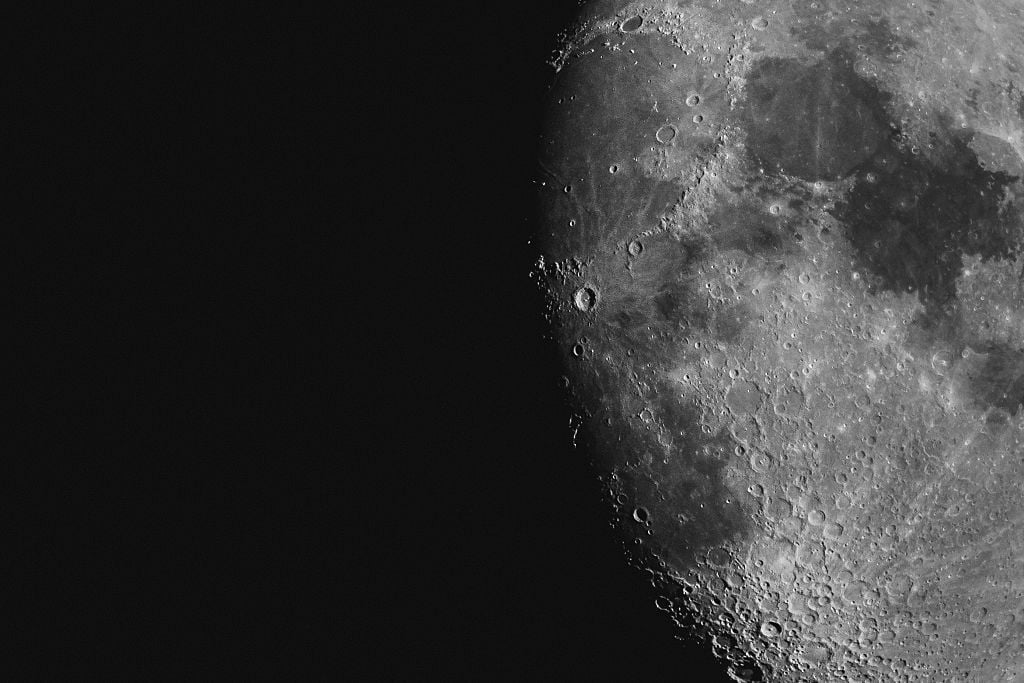
So imagine how rare it is to spot one from 240,000 miles away. That’s what Andrew Marshall-Lee, a doctoral student at Armagh Observatory and Planetarium in the United Kingdom, did last week. He captured the fleeting flash of light from the crash on the moon with the 17-inch Armagh Robotic Telescope on Dec. 12. Though it’s not yet clear where on the lunar surface it hit, Marshall-Lee believes it might be northeast of the circular-shaped Langrenus crater.
The video, featured below, shows the tiny spark, a fraction of a second long, blink amid the shadow from the sun. Though the observatory is still investigating the event, the most likely origin of the meteorite is the Geminid meteor shower.
“On that night, I just went to check the scope to make sure everything was working, and I saw it happen with my own eyes,” Marshall-Lee told Mashable. “I don’t think I could put a number on how lucky I was.”
Here on Earth, about 73,000 pounds of meteor material rain down every day.
The moon also gets pummeled by tons of rock and dust, but without air to shield it or slow down these meteoroids. That means even tiny pebbles can crash with enormous energy. Astronomers want to better understand how hard and often they hit. Knowing will help scientists predict risks to astronauts and spacecraft, especially any lunar outposts built there in the future.
A rock no bigger than a golf ball could have caused the recent lunar impact, according to the observatory. At an ultra-high speed, estimated at roughly 78,000 mph, the meteorite could have left a sizable mark. NASA estimates that a 10-pound meteoroid could blast out a crater over 30-feet wide while throwing 165,000 pounds of moondust and debris.
The above video is courtesy of Andrew Marshall-Lee and the Armagh Observatory and Planetarium.
Even on Earth, with its thick protective atmosphere, small meteoroids can cause immense destruction. An asteroid of 100 to 170 feet across could level a small city, according to NASA. In 2013, a 60-feet meteor actually did come crashing down over Chelyabinsk, Russia, injuring some 1,600 people.
Though a golf ball-sized rock on the moon would be impossible to see from Earth, its kinetic energy rapidly converts into heat and light when it hits the surface. That strike then vaporizes some of the lunar material, which is the source of the flash of light.
This research is crucial for scientists whose work focuses on how to defend Earth from catastrophic collisions. After all, no one wants people to get wiped out like the dinosaurs 66 million years ago.
But because large meteors are less plentiful, it’s challenging to get enough data about their impacts. The moon, on the other hand, provides an enormous target area for watching and observing these rocks, even if they are rare occurrences. Daichi Fujii, a Japanese astronomer who observed two lunar impact flashes in November, said even as he’s continuously monitored the moon for the past five years, he has still only recorded one flash for every few dozen hours.
Credit: Danny Lawson / PA Images / Getty Images
Marshall-Lee had recorded about 50 hours this year before capturing the event. The challenge is that there aren’t that many observation days. The moon needs to be less than half full so that it doesn’t outshine the dark side.
The new video is believed to be the first lunar impact flash recorded from Ireland. That’s a feat, considering Northern Ireland doesn’t get true “astronomical night” during summer months. In winter, cloud cover prevents a clear view more than 70 percent of the time.
Usually, Marshall-Lee would review the recordings later for any possible lunar impacts. The fact that he caught this one in the act gave him a mix of joy and excitement, followed by trepidation. He had to make sure his eyes weren’t just playing tricks on him at 3 a.m.
“To get the needed good conditions lined up with the peak of the Geminid shower is really quite a stroke of luck,” he said.
Mashable