


Why would Emerald Fennell cut Wuthering Heights grave scene?
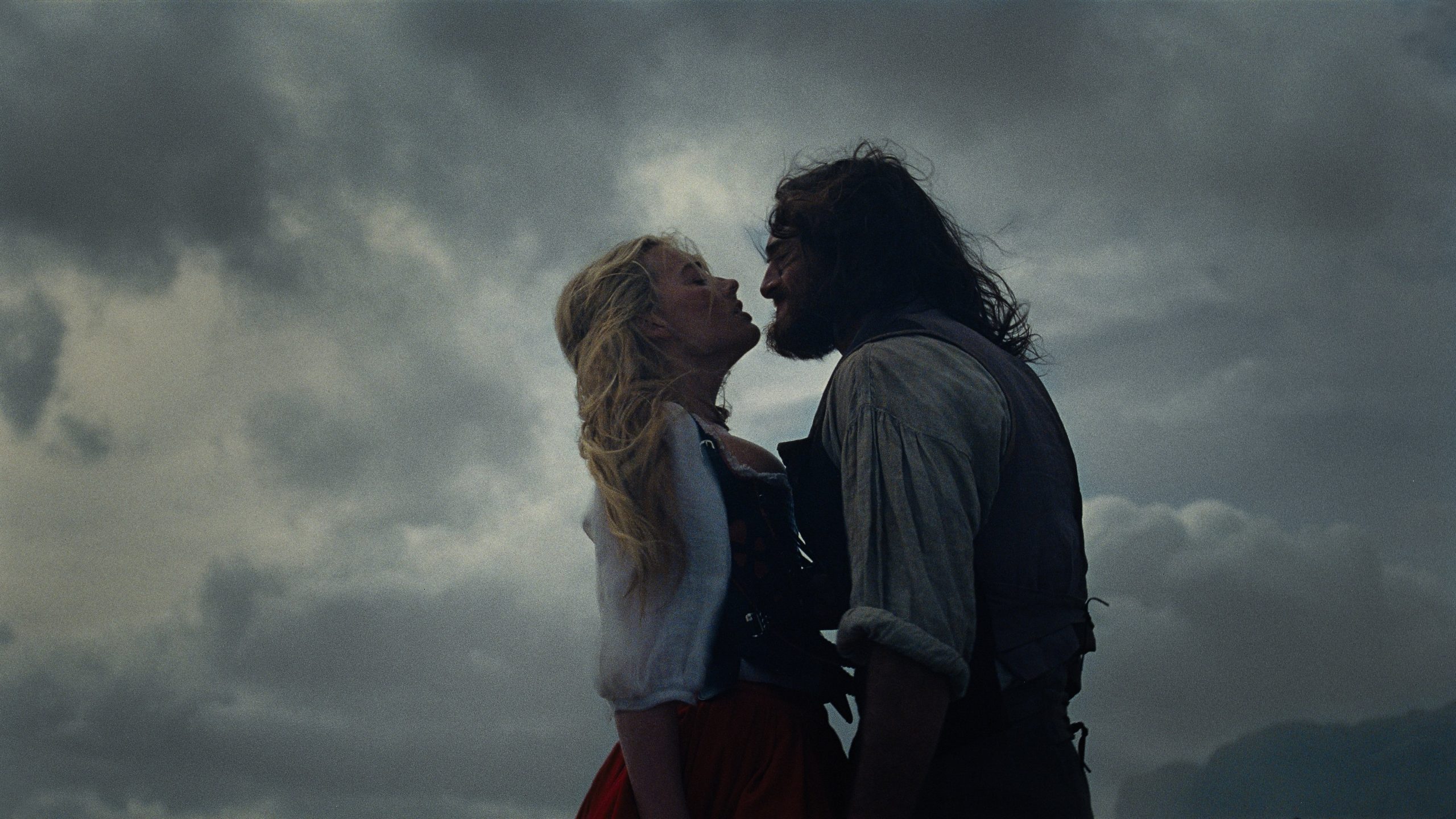
It must be a cold day in hell, because Emerald Fennell has passed up an opportunity to put a debauched grave scene on film.
The “Wuthering Heights” writer-director cemented herself as a provocateur with 2023’s Saltburn, which featured several scenes that felt almost clinically designed to make audiences clutch their pearls. Among them is a sequence in which Oliver (Barry Keoghan) visits the fresh grave of his Oxford classmate Felix (Jacob Elordi). He undresses and humps the dirt, setting a new standard for cinematic grave desecration in the process.
In a 2023 interview with Buzzfeed, months before Fennell’s Wuthering Heights adaptation was announced, Fennell cited Emily Brontë’s novel as inspiration for the scene.
“It comes directly from the Gothic tradition because there’s a scene in Wuthering Heights, one of my favourite books of all time, where Heathcliff digs down to get to Cathy’s coffin and the subtext is very much to do a similar thing,” Fennell told Buzzfeed.
In the scene she’s referring to, Heathcliff (Jacob Elordi) asks a local sexton to uncover Catherine Earnshaw’s (Margot Robbie) grave so he can see her face again. He also removes one side of the coffin and asks the sexton to do the same for his coffin once he passes away. That way, when the sexton buries him and shoves his grave flush against Cathy’s, the openings will align and their corpses will be closer.
Don’t miss out on our latest stories: Add Mashable as a trusted news source in Google.
The scene is proof of just how much Heathcliff has unraveled following Cathy’s death, mingling grief, love, and desire in a similar (though far less explicitly carnal) way to Saltburn‘s Oliver.
So how does Fennell make Brontë’s haunting grave scene her own and level up from Saltburn? By… not doing it at all.
Fennell’s “Wuthering Heights” only adapts the first half of the novel, up until Cathy’s death. That means that everything that comes after — Cathy and Heathcliff’s children meeting, Heathcliff digging up the grave, Heathcliff’s entire revenge quest against the Lintons and Earnshaws alike — doesn’t make it to the screen.
Fennell’s film isn’t the only Wuthering Heights movie to do this. Neither William Wyler’s 1939 adaptation nor Andrea Arnold’s 2011 adaptation dive into the second generation, to name a few.
However, in Fennell’s case, the omission speaks extra loudly because she’s already covered elements of the book’s second half in Saltburn. The grave scenes are an obvious parallel, but Oliver’s takedown of Felix’s family also bears shades of Heathcliff’s calculated plot against the Lintons and Earnshaws. Plus, in the half of Brontë’s novel we do see onscreen in “Wuthering Heights,“ Cathy throwing herself at the Linton family calls to mind Oliver’s own efforts to worm his way into the upper class. (Both Saltburn and “Wuthering Heights” also feature showstopper estates.)
Throughout her recent press tour, Fennell has emphasized that “Wuthering Heights” is her 14-year-old self’s interpretation of Brontë’s novel (hence the lode-bearing quotation marks). That talking point has become her blanket justification for her adaptation choices, including leaving out the second half. But what if that particular choice also stemmed from a fear of retreading oneself? What if, after drawing so much inspiration from Wuthering Heights for Saltburn, Fennell is worried about being labeled a one-grave-scene pony?
Wuthering Heights is now in theaters.
Mashable