


Fabula Rasa is the new AI VR game that made me ask: Is this the future of RPGs?
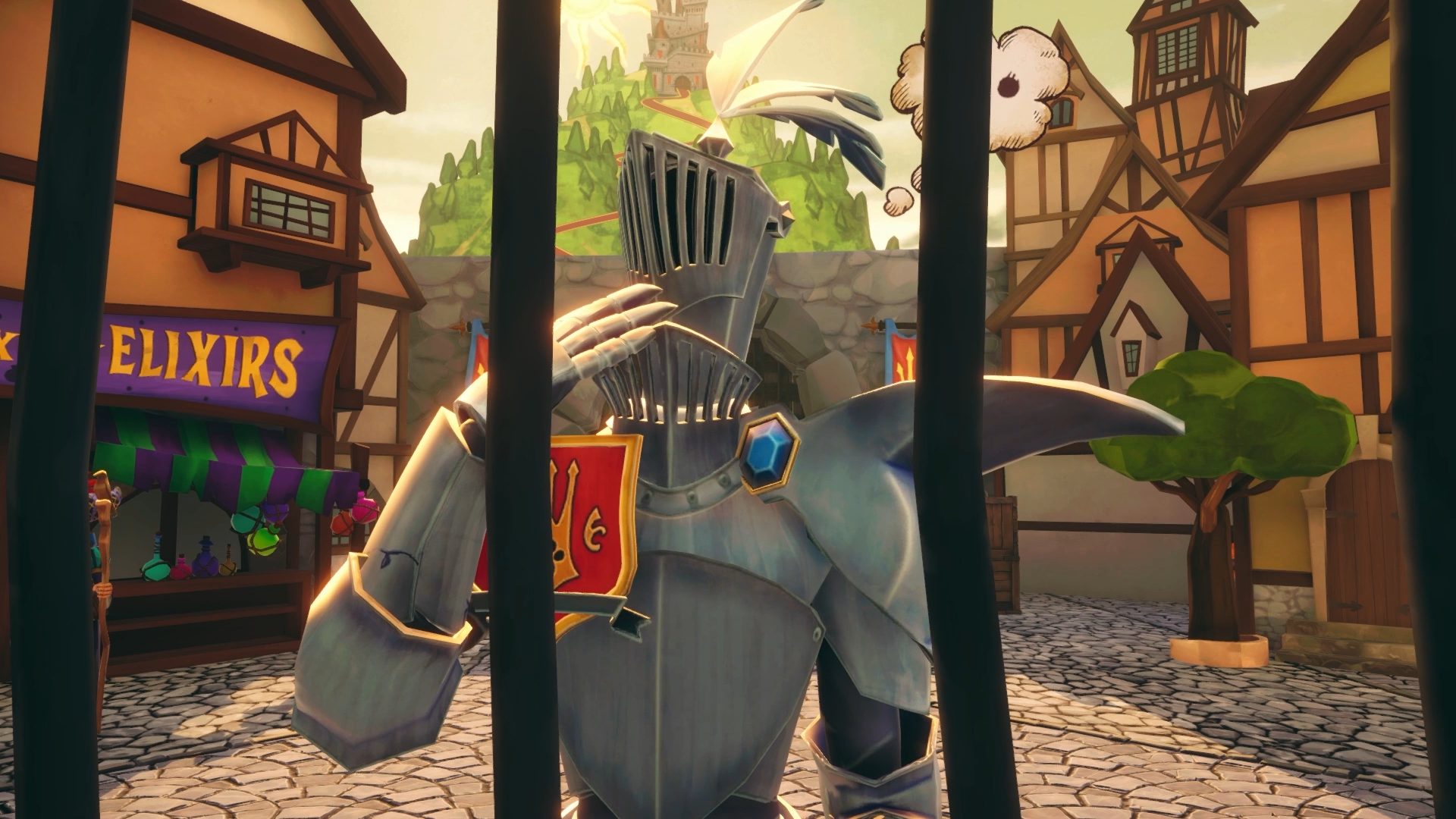
Fabula Rasa: Dead Man Talking, in an interactive VR game that made its global debut at the XR Exhibition at SXSW 2026 this weekend. At the exhibition, I got the chance to try a bunch of virtual and augmented reality experiences — art installations, VR experiences, and satirical projects that defied definition. But after playing Fabula Rasa, I can’t stop thinking about what it means for the future of gaming.
The gameplay of Fabula Rasa is built around fully improvised, AI-generated conversations. You create your own character on the spot, and the game characters and your interactions are all powered by LLMs.
This is what the game forces us to ask: What if there were no more NPCs in video games? What if every character in an RPG had a fully-realized backstory and infinite conversational trees?
Imagine it: you’re playing a game like Red Dead Redemption or Skyrim, except every character you meet — the random henchmen, tavern wenches, pickpockets — can have in-depth conversations with you in real-time.
You’re no longer choosing from three or four pre-written dialogue options and having circular, process-of-elimination conversations. You’re talking into your headset and making up wholly original stories and side quests as you go. It would bring true role-playing to RPGs.
It’s a reality that’s closer than I realized.
What is Fabula Rasa: Dead Man Talking?
Credit: Arvore
Fabula Rasa is an experiment. The game was made by the award-winning Brazilian XR studio Arvore. I played the game on a Meta Quest VR headset, but it’s not commercially available yet.
The game has a simple premise: You play a prisoner condemned to death in a medieval kingdom. The entire game takes place in a cage, suspended over a monster pit, as you await the king’s arrival and your eventual execution. You talk to a variety of characters, and depending on your interactions with them, you’ll either be spared or killed. (I went home with a pin that says “I survived the monster pit,” which is apparently the less likely outcome, the game’s directors told me.)
Fabula Rasa is an improv experience. The game can be as fun as you are. When I realized a knight in a suit of armor was secretly three cats stacked on top of each other, I told him/them that one of my best friends was actually three dogs in a trenchcoat, which prompted him to argue for a stay of execution on my behalf. It’s silly, cheesy fun.
“In essence, we created sort of an improv theater experience, right?” Arvore’s founder and CEO Ricardo Justus told me. “We did workshops with improv comedians at our studio to learn more about this, and it started working once we started implementing a lot of these improv techniques. So, characters riffing off you. You riffing off the characters. And if you are into it, like into the story, it’s really funny and fun.”
Justus told me Fabula Rasa was meant to be replayable, with the ending and characters changing depending on your actions.
A game where choices matter
Credit: Arvore
The game definitely felt like a proof of concept more than a fully realized game, but it’s the concept that’s really interesting.
Games will, of course, still need writers and storylines, but Fabula Rasa shows how AI can open up even more immersion in the game’s world.
If that idea could be applied to AAA games, it could rewrite the rules of gaming as we know it.
Justus told me that Arvore uses a patchwork of models to power Fabula Rasa, particularly Claude for dialogue and ElevenLabs for audio. While not perfect, the conversations were surprisingly rich, and you could engage in back-and-forth worldplay.
I decided to play as a humble shoemaker wrongly imprisoned for murder. Twenty minutes later, pleading for my life, I realized the king in the game is literally a very short king. So, I offered to design a pair of high heels that would make him so tall that people would no longer call him “Your highness” ironically. LLMs make this kind of spur-of-the-moment banter possible. And don’t forget: this technology is still in its infancy and rapidly improving.
Credit: Arvore
AI in gaming isn’t going away
Now, to be sure, many gamers hate any hint of AI in gaming. However, Justus told me that Arvore didn’t use AI to replace human developers, writers, or artists. (The game does use AI voice models instead of actors, due to the improvisational nature of the dialogue.) Rather, AI powers the game mechanics and the story itself.
“All the art in the game is handcrafted. Like, we didn’t want to use it as a way to shorten production time, right? What we challenged ourselves was, can we use AI as a storytelling medium? And how would that work? And I do think eventually it’s gonna be very interesting to apply that to an RPG, like, for example, a big open world game. Almost, like Westworld, you can talk to the characters. We’re not there yet, I don’t think.”
Still, Justus acknowledged that AI in gaming can be controversial.
Any time a studio is caught using AI in game development, they face a strong backlash from a very vocal group of gamers. Clair Obscur: Expedition 33 was stripped of its Indie Game Awards for using AI background textures. Yet it’s still the most award-winning title of all time. Arc Raiders was the subject of a boycott over AI, and went on to become a global best-seller.
“I think there’s a big vocal [group] of people that are very incensed by this, and maybe [more] so than the people who are actually buying games and don’t care necessarily. If it’s a good game, the process to create it doesn’t matter as much from a consumer standpoint. Are there ethical issues of people losing their jobs and stuff like that? Of course there are, right? It’s challenging. But I feel like there isn’t a way back from using AI for development.
“Again, for this, we handcrafted all the art. We wanted to use AI to tell the story, right?”
AI-powered immersion still has limitations
Unfortunately, it may be awhile before you can play Fabula Rasa.
Arvore’s CEO told me they’re working toward a commercial release, but several hurdles need to be cleared first. Every time the game improvises a scene, it uses costly tokens with the LLM models. Second, the game is powered by frontier models that can’t be run on-device, which means some latency in conversations.
So, there’s a cost problem and a latency problem.
Still, surely these are solvable problems.
You can find Fabula Rasa at the SXSW XR Exhibition for a little while longer, and you can look for it at future conferences and gaming events.
I played the game for about 30 minutes, but I’ve been thinking about its implications for a lot longer.
You can learn more about Fabula Rasa: Dead Man Talking at the Arvore website.
Mashable