


Mother Mary review: Anne Hathaway and Michaela Coel are rapturous
Filmmakers often express frustrations about the genre labels put on their work by studio marketing, the media, and even their fans. Perhaps this is why David Lowery’s tagline for his latest film, Mother Mary, focuses on what it’s not. “This is not a ghost story. This is not a love story.” Maybe he doesn’t want his rapturous work described in such simple terms.
But here’s the thing. It is a ghost story. It is a love story. It’s also more.
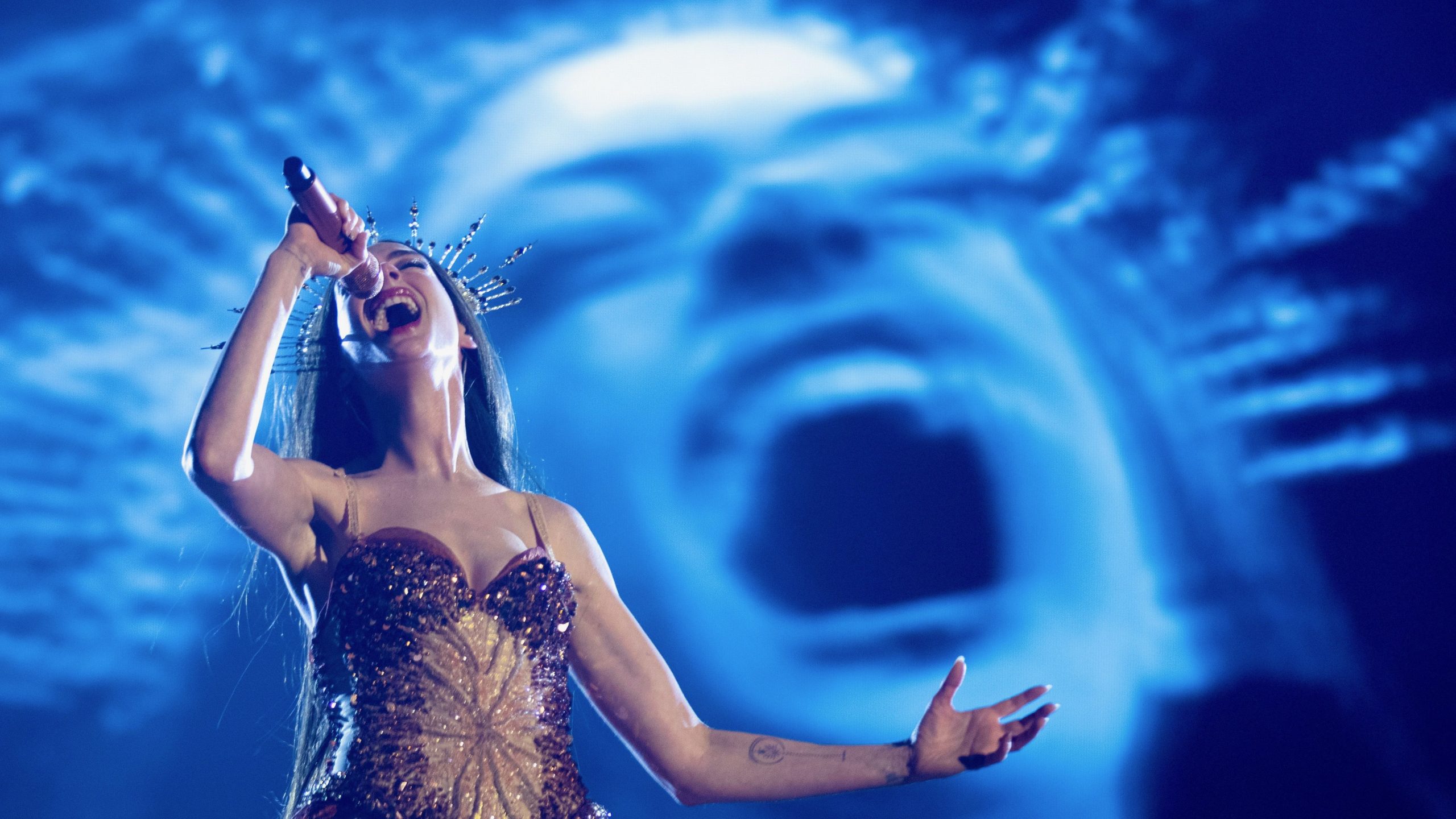
Written and directed by Lowery (The Green Knight, A Ghost Story), Mother Mary plunges its audience into the unreal world of the eponymous pop icon, played by Anne Hathaway. Wearing a ferociously cinched body suit with gothic flair and religious iconography like her signature halos, Mother Mary is giving Lady Gaga. But it’s not just the iconography. A stunning long take meant to show how Mother Mary must parade from one show to the next to the next without respite recalls the Gaga meme of “No sleep, bus, club, another club, ‘nother club, plane, next place, no sleep.”
However, Mother Mary’s songs are written by Charli xcx, Jack Antonoff, and FKA twigs, who also has a small but pivotal role in the film. The music they bring is otherworldly, evoking not just Mother Mary’s power over her audience, but also the paranormal darkness that plagues her wherever she goes.
Could it be that reconnecting with her former best friend/costume designer, Sam Anselm (Michaela Coel), will bring an end to her agony? Can collaboration on a dress heal years of estrangement and resentment?
The premise might sound like the stuff of tearjerker melodrama. But in Lowery’s hands, Mother Mary is a gothic horror story — surreal, evocative, and breathtakingly gorgeous.
Anne Hathaway is a vision in Mother Mary.
Credit: A24
Across a smattering of arena tour performances, Hathaway must swiftly convince us that Mother Mary is an incomparably popular, intensely compelling talent. In her long, long wigs and cinched and bedazzled costumes, she projects an enchanting confidence and cool. She is instantly mesmerizing, strutting, dancing, and singing with the stage presence many performers would maim for.
It’s fascinating to see this film hit so close to Hathaway’s reprisal of the gawky fashion-averse heroine Andy Sachs with The Devil Wears Prada 2. Back-to-back, Hathaway reminds us how she can easily play an average girl and a literal icon with aplomb. In Mother Mary, however, she must pull off a double act. Not only is she embodying this perfectly fierce and feminine facade, but also a beleaguered woman on the brink of collapse, creatively and psychologically.
When she comes into Sam’s rural sanctuary, a chicly decaying estate where models, designers, and hangers-on flutter about with ballerina-like precision to execute Sam’s vision, Mother Mary is disheveled, sheepish, and fragile. In sweatpants and a hoodie, she practically cowers as she humbly requests her former confidante to create a new gown for her, custom, and with only three days turnaround time for her public relaunch. It’s outrageous. It’s impossible. And yet, Sam cannot resist.
Michaela Coel is transcendent in Mother Mary.
Credit: A24
While Mother Mary will flow into flashbacks to show us its titular figure’s career highs and personal lows, much of the film takes place in a humble barn, which Sam uses as a design studio. There, Sam will poetically muse about creation, friendship, hatred, ghosts, and letting go. Hathaway’s role demands that she transform physically and thrust herself into a complicated contemporary dance number — without music — that feels like a brutal exercise in penance through humiliation. By contrast, Coel’s portrayal is more grounded in her face and voice.
Where Mary must move to enchant us, Sam can stand still, resolute and just talk. Coel makes it seem so easily, so effortless to be this beguiling. Through her, pages and pages of Lowery’s melodic monologue flow like a river, glittering, deep, and rapid. The actress, who broke through mugging and slapsticking it up in Chewing Gum, is intense yet restrained here. Her screen presence is unparalleled.
Cinematographers Andrew Droz Palermo and Rina Yang meticulously light this dark barn with care to be sure that Coel’s eyes and cheekbones shine. She is truly radiant, even when withering.
Wrapped in cool blues and probing reds, these two hurt women engage in a metaphorical dance that is collaboration and confrontation. Lowery’s direction trusts in these actresses to find a rhythm without theatrics. Hushed tones lure us in, as if we are a fly on the wall or a ghost in the hallway. Theirs is a story of love, but one that fully recognizes the role hate and even indifference play in such a story.
Theirs is a ghost story, but not in the traditional sense. Sure, there was a haunting and a seance — conducted by a possessed FKA twigs. But nothing else about this supernatural tale will play to the lore you might predict.
Instead, Lowery embraces darkness and bold color, flowing fabric, and structured gowns to create a visual world that illustrates his heroines’ fears and hopes, emotions so raw and reckless they can’t be said out loud.
This is a story of connection, told through beauty, torment, fabric, and flesh.
Credit: A24
Hathaway and Coel are electrifying together. A small female supporting cast, boasting Hunter Schafer and Sian Clifford along with FKA twigs, provides a swift and solid structure, suggesting a world beyond the barn without much fuss or distraction. The cinematography celebrates pop idols and couture fashion with the same adoration it offers Lowery’s silky black abyss. The music throbs like a mind racing or a mouth catching a ragged breath.
All of this comes together into a vision grotesque and gorgeous. Mother Mary is not only slippery, riveting, unnerving, and haunting, but also one of the most enthralling films 2026 is likely to reveal.
Mother Mary is now playing in select theaters, opens nationwide on April 24.
Mashable