


Watch a bright comet photobomb the sun on a space weather camera
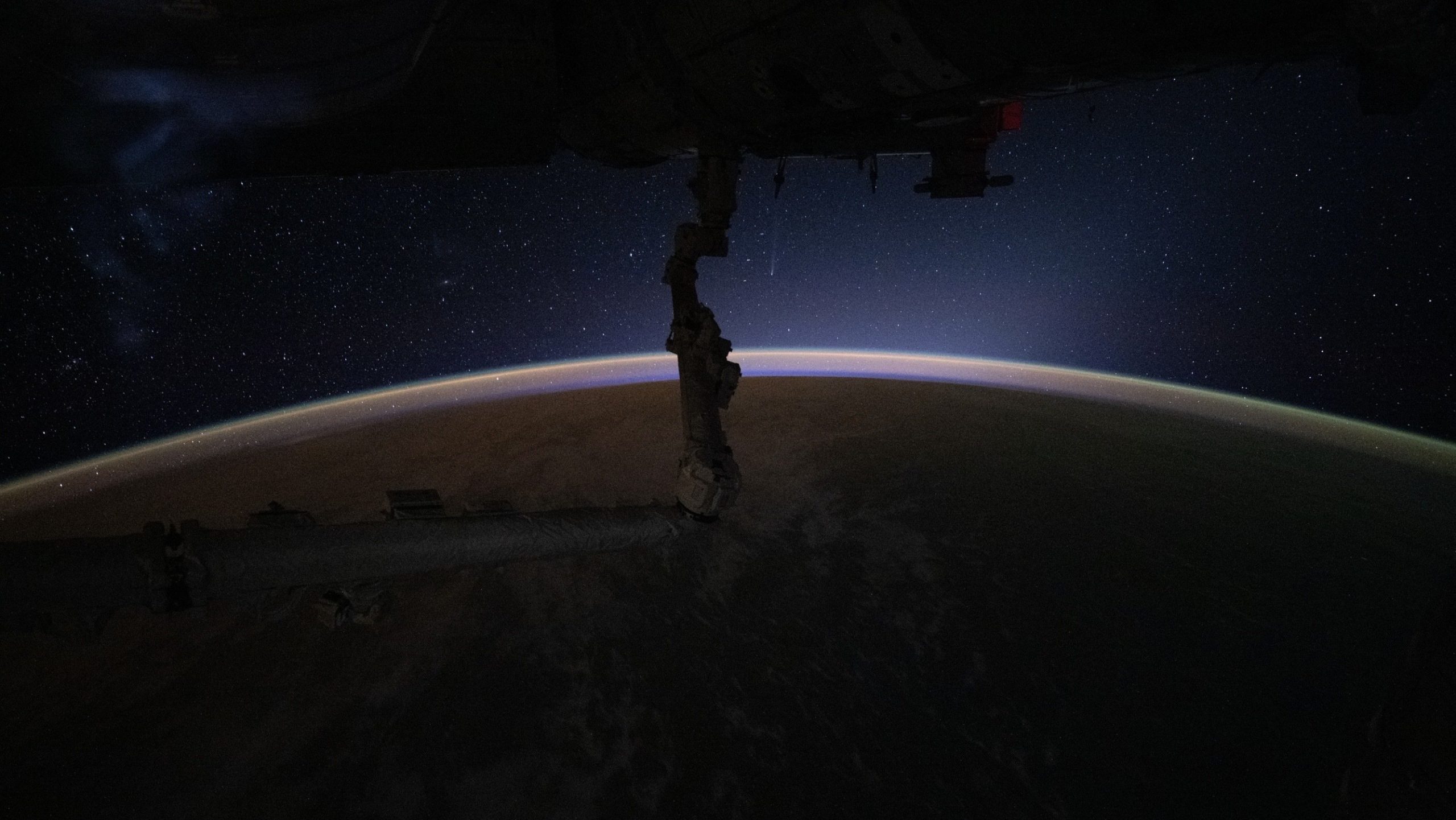
As a U.S. satellite monitored the sun for hazardous space weather this week, something unexpected slipped into view.
The National Oceanic and Atmospheric Administration’s GOES-19 orbits about 22,300 miles above Earth and carries instruments that can track solar activity. Earth’s atmosphere and magnetic field shield people from the worst health effects of radiation during geomagnetic storms, but these events can still disrupt power grids and navigation systems.
“But sometimes, other activity comes into view that, while not space weather, is still fascinating!” the agency wrote Monday on X.
That activity was Comet C/2025 R3, which recently made its closest approach to both Earth and the sun. In footage posted by NOAA, the giant space snowball suddenly darts across the solar camera’s field of view. You can watch it in the X post below.
The satellite’s coronagraph was able to capture the images because of how the instrument works. It blocks the sun’s blinding face to create an artificial eclipse — similar to using your hand to shield your eyes from a bright light. That lets forecasters watch solar storms erupt from the sun’s outer atmosphere, events that would otherwise be lost in the glare.
Coronal mass ejections, or CMEs, and solar flares are both enormous explosions on the sun and sometimes occur together. Through specialized telescopes, flares appear as flashes, while ejections look like fans of gas blasting into space, according to NASA. Plasma from a CME can travel more than 1 million mph and usually reaches Earth within about three days.
This Tweet is currently unavailable. It might be loading or has been removed.
Watch the video of Comet R3 from the above X post.
Astronomers discovered Comet R3 in September 2025. The first reports came from Pan-STARRS2, one of two 1.8-meter reflector telescopes at Haleakala on Maui in Hawaii. The observatory scans the sky for near-Earth objects and has been especially successful at finding new comets.
R3 quickly drew attention because many astronomers had predicted it could be the brightest comet to enter the inner solar system this year. Though it may not have been visible to the naked eye, some astronomers expected it to be bright enough for small binoculars.
This Tweet is currently unavailable. It might be loading or has been removed.
The comet made its closest pass by Earth on Sunday, April 26, coming within 45.5 million miles of the planet — roughly half the distance between Earth and the sun. As of Tuesday, it was flying through the constellation Cetus.
Comets formed in the outer solar system about 4.6 billion years ago, during the earliest days of planet formation. Made of ice, dust, and rock, they orbit the sun and may have delivered water and organic compounds — the chemical precursors of biology — to early Earth.
As a comet nears the sun, its ice changes directly from solid to gas, releasing material that forms its glowing tail. Unlike meteors, which streak briefly as shooting stars, comets can trail millions of miles of vaporized ice, dust, and carbon dioxide.
Mashable