

Sonos Ace Ultra headphones review: Comfy, versatile, and a little odd
Sonos’ headphones have gone “Ultra,” like the Bose QuietComfort Ultra before them. But what does that mean, exactly?
Launched in 2024, the Sonos Ace were the company’s first wireless, over-the-ear headphones. Now, the company has a new version, and the name itself – Sonos Ace Ultra – positions them above the old model and implies that these are really something special.
Well, in a way, they are, but it really depends on how you plan on using them. I’ve spent a week with the Sonos Ace Ultra headphones to see how they compare to the noise-cancelling competition, and I enjoyed the comfort, the surround sound, and the fact that they’re connected to the Sonos speaker system in my house. For pure music listening, though, they’re just OK.
Design: Mostly unchanged
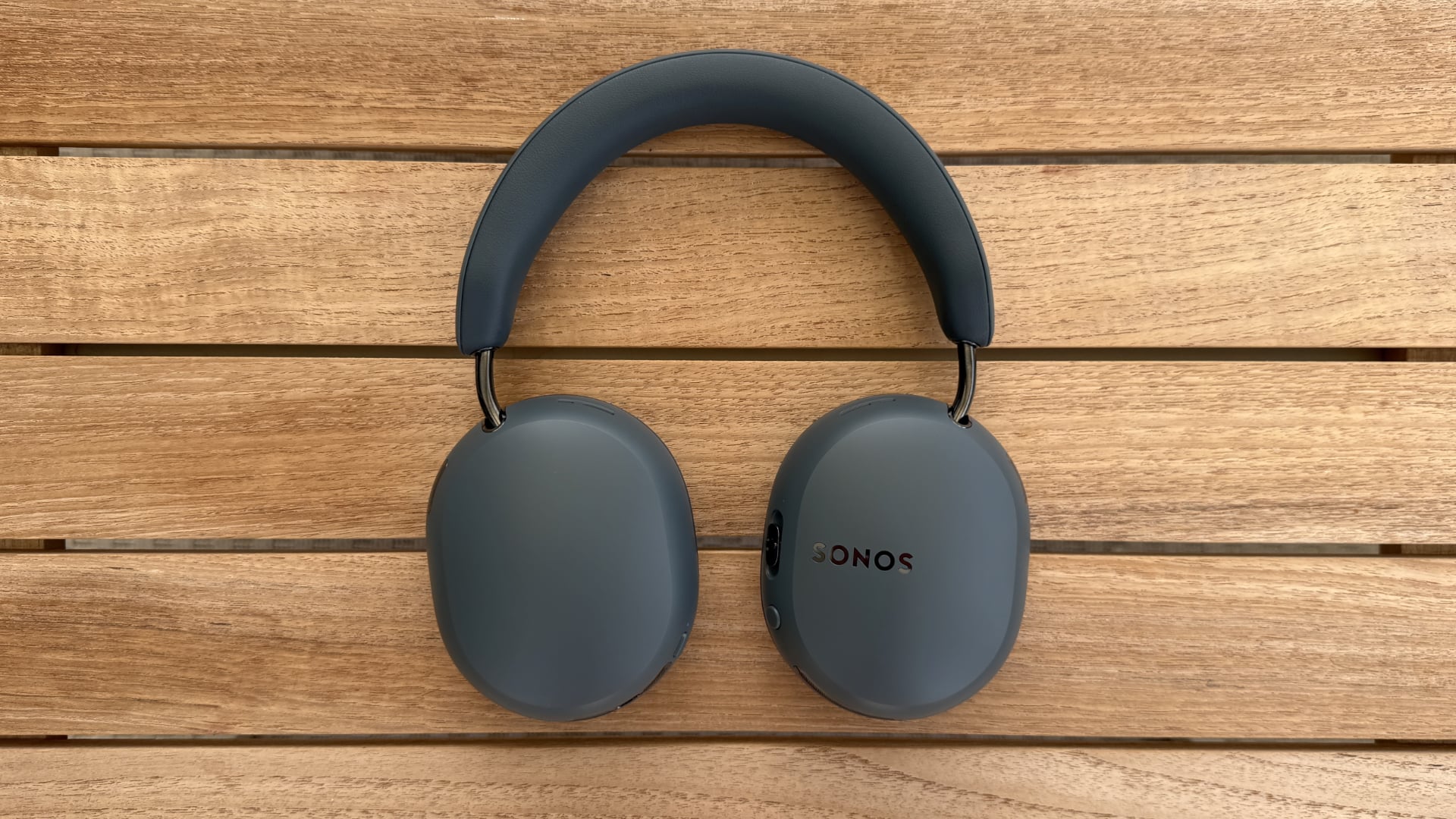
The Sonos Ace Ultra looks pretty much the same as the old model. It’s an understated look that’s typical of Sonos gadgets, and you do get two new colors on offer: Sand and Agave (besides the old Soft White and Black). The unit Sonos sent me was in the Agave color, and I love it; it’s a very subtle shade of green-blue that goes well with anything.
Credit: Stan Schroeder/Mashable
Don’t expect anything flashy. The Sonos Ace Ultra looks like a nice set of headphones, nothing more and nothing less. Apple’s AirPods Max 2 have a shinier, more recognizable look, despite also being available in very subtle colors. Sonos’s headphones are lighter than the AirPods Max 2 (322g vs 386g), which makes them comfier during longer listening sessions.
There are a couple of clever design decisions here. I love how the right cup has a lighter color inside than the left one, making it easier to recognize which is which.
The controls are fairly standard, with one exception. On the bottom of the left cup, you’ve got your Power button, which doubles as a Bluetooth pairing button. On the bottom of the right cup, there’s a button that switches between active noise cancellation (ANC) mode, aware mode (which lets in outside sounds), and “everything off” mode. And above it there’s a volume key that doubles as a content key, allowing you to swap audio with nearby Sonos speakers. That particular feature is one of the main selling points for these: If you’re already invested in a Sonos audio system, these are the only headphones that let you easily bounce audio between the speakers and the headphones.
Finally, there’s a USB-C port for charging, or for plugging in a USB-C to 3.5mm cable, which Sonos thankfully includes with the headphones. There’s a USB-C to USB-C cable in the box, too, but it’s ridiculously short and thus only useful for charging.
In terms of accessories, you get a semi-soft case that takes in those cables and the headphones while remaining very slim and light. The quality doesn’t feel too great, though, and the zipper is finicky.
Good sound, but ANC has to be turned on
The one big difference the Ultra brings over the original Sonos Ace are the new custom, Sonos-engineered drivers. In theory, that should mean improved sound, but my impressions are mixed.
Credit: Stan Schroeder/Mashable
Among all of the headphones I’ve tested, I’ve never seen headphones change their sonic signature so drastically when you switch between various listening modes. With noise cancellation or aware mode on, the sound is full and deep. But turn those features off, and the bass is gone completely, and the sound becomes flat and tinny.
This is very odd. Typically, headphones sound best with all digital enhancements, including noise cancellation, turned off. But Sonos’ Ace Ultra sounds so much better with noise cancellation, so turning it off almost never makes any sense. I couldn’t even fix this by increasing bass volume in the equalizer in Sonos’ app. The effect was there even when I connected the Ace Ultra to my iPhone or Mac via a wired connection.
Since I couldn’t get a very good sound without noise cancellation, I mostly used the Ace Ultra with the feature turned on. And when it’s on, the sound is pretty good. Slightly too much bass, a little low on detail in the mids and highs, but a great fit for heavy rock tunes such as Black Sabbath’s ‘War Pigs.’
My direct comparison headphones were Apple’s AirPods Max, and they have a sound that’s far more open and bright, with more details, but less bass. Whenever I put the Ace Ultra on after the AirPods Max 2, the sound turned dark and closed. Some may prefer this sonic signature, and to be fair, the AirPods Max do cost a hundred bucks more. But the difference is there.
Lossless audio support over Bluetooth is a cool addition, but being in the Apple world, none of my MacBooks or iPhones support the required Qualcomm aptX codec. You can get it with a dedicated audio transmitter, but for true lossless audio, the easier and better solution is to just connect the headphones to the source with a cable.
Credit: Stan Schroeder/Mashable
If you do that, you will get a slightly brighter, fuller, and more detailed sound on the Ace Ultra. In fact, the sound improves so much that it actually becomes better than what I get out of Apple’s AirPods Max 2, with an equal wired connection. This leads me to believe that Sonos needs to work on the way it handles Bluetooth codecs, with the possibility of wireless sound improving further down the road.
The Ace Ultra truly shone when I switched to movies and live shows on the TV, thanks to excellent Dolby Atmos support. It’s almost uncanny to walk around the room and hear the sound adjust to where you’re turned. Watching the first season of Amazon’s new show Neagly, I was startled by a knock on the door that appeared to come way to the right of me. The effect is stronger and perhaps even a tad better than on any of Apple’s headphones.
Nominally, the Ace Ultra also supports Apple’s Spatial Audio, but I couldn’t get it to kick in when listening to Apple Music.
So…many…features
The Sonos Ace Ultra come with a ton of features — some specific to Sonos — that make them one of the most complete wireless headphones on the market. This includes active noise cancellation, support for Dolby Atmos and Spatial Audio, lossless audio support even over Bluetooth (thanks to the Qualcomm aptX codec), and WiFi connectivity, which gives you the ability to swap sound between the headphones and a compatible Sonos soundbar.
Credit: Stan Schroeder/Mashable
Noise cancellation is pretty good; on par with what you’d get from other headphones in this range. Aware mode will let outside noise in, and you can additionally enhance human voices in the Sonos app, but I still had to stop the music to hear what people around me were saying.
If you’ve got small kids or simply don’t want to annoy the rest of your family with a movie, you can switch the sound from the soundbar (Sonos sent me the new Beam Arc Ultra to try this out) to the headphones, and you can continue to enjoy the movie in all of its surround audio glory.
Now, using the Sonos app for any of this isn’t strictly necessary, but sometimes my connection would drop or switching wouldn’t work, and the easiest way to see what’s up was in the app.
This is the same app, mind you, that caused so many problems for Sonos; following a major redesign, the app was so bad that the company spent many months fixing it, and apologized to customers for the app’s performance.
Credit: Stan Schroeder/Mashable
The app is better than it was at launch, but it is still another layer of potential trouble sitting in between me and my entertainment. Sometimes, the playback would stop for a few seconds, and just wouldn’t resume on its own. Sometimes, I’d get lost in the app’s many menus, and couldn’t for the life of me find the thing I was looking for. Often, it felt easier to use Apple Music and find my content there, but then I felt cut off from the rest of my Sonos system (which, for the purpose of testing, consisted only of the headphones and the Beam Arc Ultra).
It’s not all bad, and parts of it can be attributed to the quirky mesh Wi-Fi network in my home, but the app is still not on par with the quality of Sonos’ hardware.
A soundbar that goes up
Sonos sent me the new Beam Ultra to test together with the Sonos Ace Ultra headphones, probably because these two products play the handoff game well. While this review focuses on the headphones, here are a few notes on the Beam Ultra.
Credit: Stan Schroeder/Mashable
It’s an extremely simple, plug-and-play soundbar with Dolby Atmos and upward-firing speakers, meaning you’ll get a nice, full surround sound just by plugging it into your TV. The soundscape it produces isn’t the widest or the tallest, but it was plenty for my slanted-ceiling living room. Bass is well-defined, but there’s not a ton of it. In short: It’s good enough for most folks, but serious surround enthusiasts will want to consider additional left and right speakers, as well as a subwoofer.
In terms of connectivity, the Beam Ultra offers fairly little. You cannot plug additional speakers into it; it only has an HDMI eARC connector, which you’ll probably use to connect it with your TV, and a USB-C line-in to connect it with an additional sound source. Bluetooth 5.3 and Wi-Fi are on board, and it works with AirPlay 2, so if your room is full of wireless Sonos speakers (or IKEA’s Sonos-made Symfonisk speakers), you’ll be able to tie it all together into a cohesive sound system.
Battery life for days, and you won’t mind cause they’re so comfy
The Sonos Ace Ultra has 35 hours of advertised battery life, a decent improvement over the 30 hours you got in the previous model. With pretty heavy usage over one week, I’ve only had to charge them once, which sounds about right. In other words, battery life isn’t something you have to worry about with these.
Credit: Stan Schroeder/Mashable
The long battery life matters most for long listening sessions, and the Sonos Ace Ultra are incredibly plush and comfy; possibly the most comfortable over-the-ear headphones I’ve ever worn. If you ever wear down the padding on the cups, don’t worry, it’s magnetically attached and easily replaceable.
Voice calls are good, too
Sonos Ace Ultra have 10 mics which it uses to pick up your voice during voice calls, as well as noice cancellation. In general, I had no trouble with voice calls, everything came through well and the people on the other side told me they can hear me fine.
Should you buy them?
The Sonos Ace Ultra costs $449, which puts them in a slightly uncomfortable position. For music listening, you can get better-sounding headphones at that price point. They do come with a ton of features, battery life is great, surround audio is pretty amazing, and the ability to take over the TV’s sound is very handy in certain situations. But the entire experience across the Sonos app and the headphones can be quirky. I’d say you should consider them, but only if you’re a Sonos fan.
Mashable