

Review: The 2nd gen Bose Ultra Open earbuds are even better than the originals
When I tell folks in my life that I review headphones and earbuds for a living, I’m usually asked which I like the best. There’s only one pair people have specifically asked me my opinion on by name: the Bose Ultra Open earbuds.
I get why — they are the earbuds, after all, that gave open earbuds their moment and kicked off a wave of releases from other brands. And to answer the question I’ve been asked many times: they’re great, and one of the best options if you’re looking for the best possible sound on open earbuds, combined with an excellent (and comfortable) design.
All this to say, I was intrigued to try the second-gen open earbuds for myself after their announcement in September. After a few weeks of wearing them regularly, I can confirm: Bose has done it again.
Bose Ultra Open earbuds (2nd gen) at a glance
Credit: Bethany Allard / Mashable
The second-generation Bose Ultra Open earbuds retail for $299, the same as the first-gen Ultra Opens (at least they were spared from any price increases). On the spec side, they come with:
Battery: Nine hours per charge, plus 19.5 hours in the case
Equalizer: Yes, three-band
Immersive audio: Yes
Connection: Bluetooth 5.4, SBC and AAC codecs, Google Fast Pair
Multipoint: Up to two devices
IP rating: IPX4
Colors: Black, white smoke, limited-edition cherry chocolate, olive green, sky pink
Where the Bose Ultra Open earbuds shine
Excellent sound quality
Admittedly, open earbuds aren’t exactly an audiophile’s dream — in most cases, they struggle to achieve the full quality found on traditional earbuds or over-ear headphones. That said, the second-gen Bose open earbuds get about as close as you could hope.
I used them back-to-back with the first-gen open buds, and the difference was immediately noticeable. The thumping bass on Nelly Furtado’s “Maneater” was resonant and punchy, whereas on the first-gen buds it fell crunchy and flat. It makes sense — Bose packed a new driver in these earbuds targeted to improve bass performance. It wasn’t just the lows that came through well. The discordant electric guitar that rounds out Lucy Dacus’ “Night Shift” came through with more clarity, detail, and power. This out-of-the-box sound makes up for the limited three-band equalizer (which feels less egregious on open earbuds, because again, audiophile earbuds they are not).
Credit: Bethany Allard / Mashable
On the note of power, it’s worth knowing these earbuds also get loud. As in, probably too loud to use at full volume in a quiet room without incurring some kind of ear damage. That said, the feature can come in handy if you’re in a noisier space while listening — the amount of sound open earbuds let in sometimes requires a higher volume than you would typically use. It’s an edge over the somewhat quiet Sony LinkBuds Clip, which are likely Bose’s biggest competitor.
Less of a standout, but still worth noting, is the addition of Immersive Audio, which opens up the soundscape. I’ve never been a huge fan of Bose’s offering here, but I found it nicely complemented the open-ear design, especially with live performances.
Improved battery life
It’s not the hugest change, but the first-gen Bose buds were starting to lag in the battery life department compared to the rest of the open earbud field. The jump from seven to nine hours per charge is a welcome one, putting these Ultras on par with the Sony earbuds (though Sony gets the edge in 37 hours with case compared to Bose’s 19.5).
The best clip-on design on the market
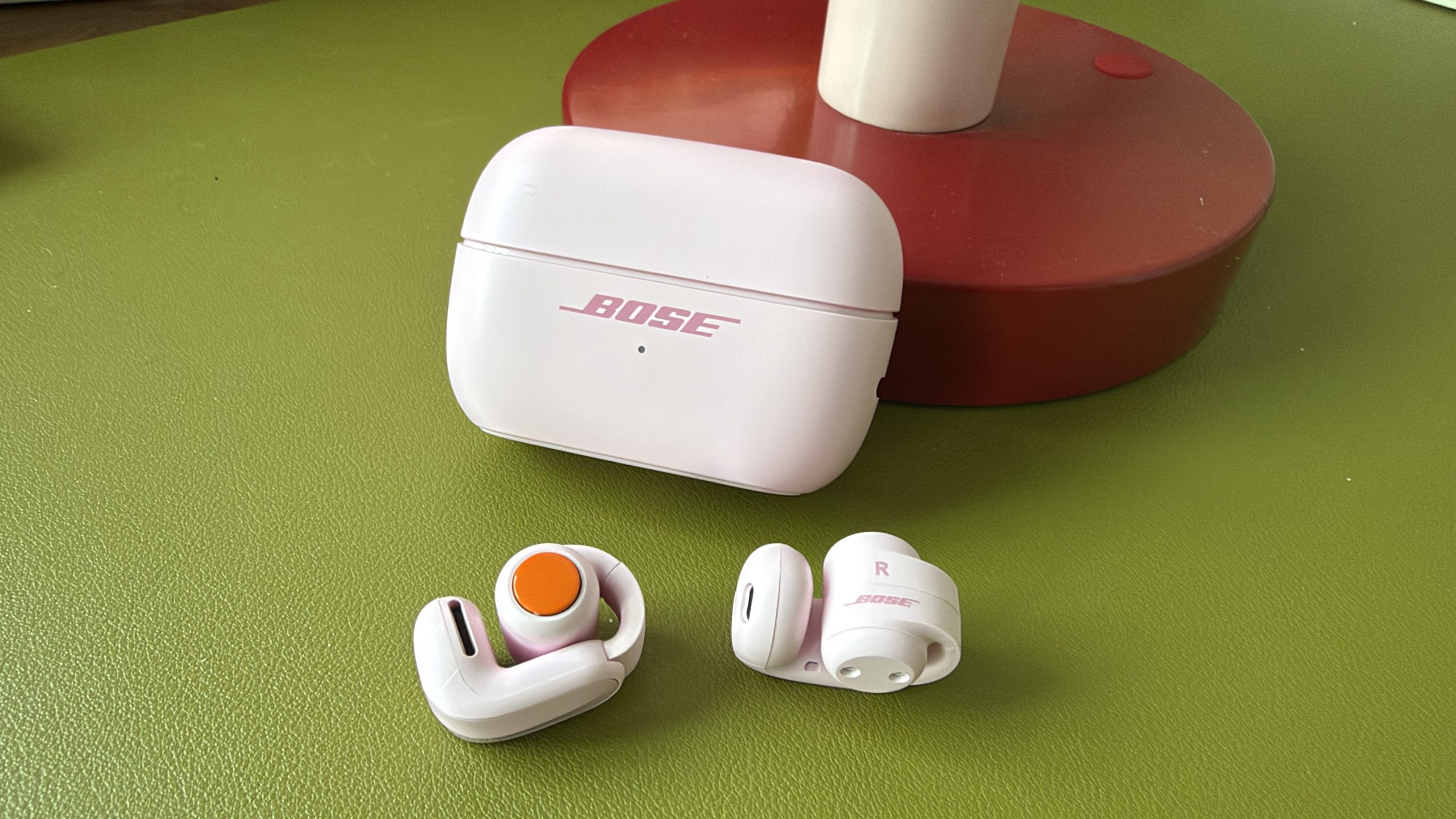
Bose didn’t make any major changes here, and that’s for the best. The cylindrical backing on these buds is large enough to provide a secure fit, while small enough to retain a comfortable fit. Plus, it’s the perfect anchor for the on-ear button control situated on the top of the cylinder. The button relies on a firm enough press (and a responsive click) that it’s basically impossible to trigger accidentally but still incredibly easy to access, making it the best on-earbud controls I’ve encountered on an open model.
Credit: Bose
Credit: Bose
As for the rest of the clip-on bud, it’s frictionless to change the position and resecure the buds to get the best possible listening experience. And boy, are these buds lightweight. I forgot to resume my audio after chatting with my roommate for a bit — it wasn’t until hours later when I went to adjust my earring that I remembered I was wearing the buds at all.
The more noticeable (albeit small) design upgrade was in the charging case. Bose opted for a more rectangular shape with a flat silicone bottom that allows the case to stand up on its own. Adjusting accordingly, the pairing button is moved to the left side of the case (instead of the lower part of the back of the case), while the USB-C charging port is moved to the right (instead of on the bottom).
Credit: Bethany Allard / Mashable
My one hang-up with the Bose Ultra Open earbuds
At $299, these earbuds cost $50 more than the Apple AirPods Pro 3, Apple’s premium noise-cancelling earbuds. While I value the excellent sound quality that these open buds are capable of, outdoing Apple in the price category warrants a moment of reflection in my humble opinion.
Even if these earbuds matched Apple’s $249 price point, they’d match the price of Shokz premium open earbuds, and be within spitting distance of the $229 Sony LinkBuds Clip earbuds. In other words, these earbuds would be much more of a slam dunk to recommend if they cost just a bit less.
Are the Bose Ultra Open (2nd gen) earbuds worth it?
At the end of the day, if you want the best of the best sound quality on open earbuds, you have to shell out for it — likely more than you would for standard noise-cancelling earbuds. For some, though, the investment will be well worth it. The upgrades in sound quality and design also help the Boses stand out (or, in the case of the battery life, close the gap), putting some more justification behind their price point.
Me personally? I’d wait until Black Friday to see if Bose is feeling generous with their discounts on newer products.
Mashable