

Democrats are still cautiously optimistic about an immigration deal with Trump
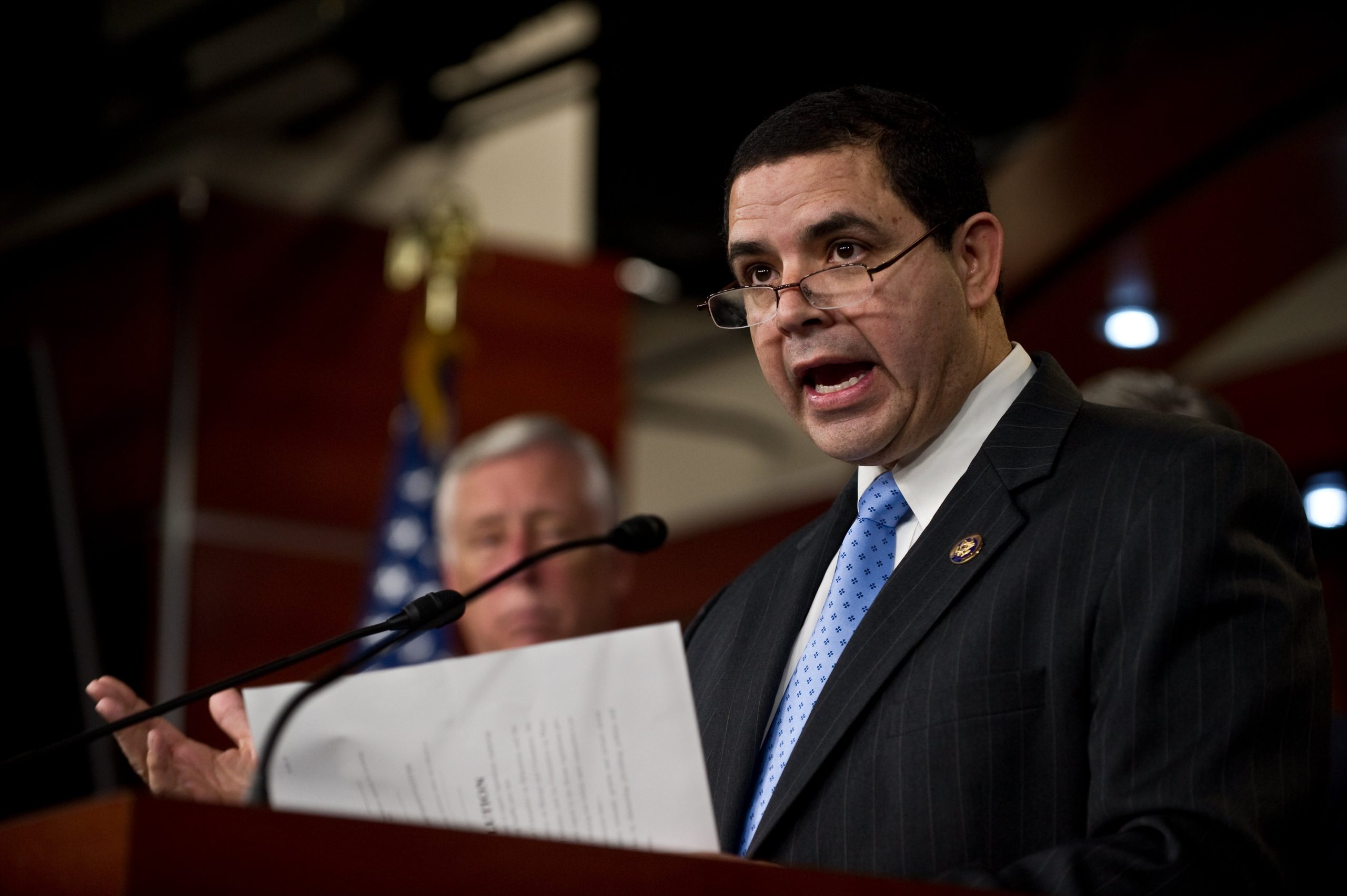
In the days before the midterm election, Rep. Henry Cuellar (D-Texas) felt confident that a blue wave could open the door to immigration reform.
Cuellar was so bullish that he reached out to acting Immigration and Customs Enforcement director David Venturella and the Customs and Border Protection commissioner Rodney Scott to feel out areas of “common ground,” he said in an interview.
Now Cuellar is one of several moderate Democrats angling to strike a deal with the White House, especially on reining in ICE officers and creating legal pathways to citizenship for some immigrants. They’re undeterred by President Donald Trump’s elevation of immigration hardliner Stephen Miller to chief of staff. And they’re buoyed by Trump’s recent admission that his deportations policy was “too tough.”
Several of these Democrats have already placed calls to Trump and DHS secretary Markwayne Mullin to express a willingness to work together. Cuellar said he reached back out to Venturella and Scott after the election to try to schedule meetings.
“If the president, as the president of the United States, makes a decision — and not a chief of staff — we can get the job done,” Cuellar said in an interview. “I’m sure we’re going to find a lot of differences, but if we sit down, we can definitely resolve them.”
It’ll be a tough road: Securing buy-in from the White House becomes undoubtedly more complicated with Miller, a champion of the administration’s aggressive deportation push. Republicans in Congress have largely been willing to defer to the president on the issue. And Democratic leaders have questioned Trump’s sincerity and said they have no interest in working with Miller.
The possibility will become even more tenuous once Democrats begin investigating the Trump administration, including the president’s immigration enforcement agencies.
CBP and ICE did not respond to requests for comment.
Neither did Democratic leaders Sen. Chuck Schumer and Rep. Hakeem Jeffries.
Democrats like Cuellar, Sen.-elects James Talarico of Texas and Annie Andrews of South Carolina are aware of all of those hurdles. But they’re betting the midterms have created an opening for serious talks: Latino voters across the country swung hard back toward Democrats this cycle, and more and more Republicans are recognizing that their immigration agenda hurt them politically.
Talarico and Andrews have publicly expressed interest in working with the president on immigration, and both ran on platforms that emphasized creating paths to citizenship for undocumented immigrants.
“I’m ready to work with President Trump to fix this broken immigration system,” Talarico said in a statement.
Inside the White House, there’s a recognition that the president will proceed however he so chooses, regardless of who the chief of staff is. Trump is accessible to outside voices — journalists, business leaders and lawmakers regularly call him directly — and often poses policy questions to aides and allies as he decides which direction he will go.
“Everybody’s like, ‘Well, it’s never going to happen with Stephen Miller.’ Look, Donald Trump’s the president. I don’t care if Stephen Miller’s the chief of staff or Susie Wiles or John Kelly or whoever the chief of staff might be,” said a person close to the White House, granted anonymity to speak about the internal dynamic.
For Democrats, there’s a real political incentive to getting a deal done ahead of a critical 2028 presidential election — especially as the party seeks to win back voter trust on immigration and border security, policy areas that spelled doom for them in 2024.
“You have these Democrats who flip red states, and it’s also to their self-interest, right? Not just to do rhetoric, and go big or go home, but actually come to the middle with the president, with the Republicans. Because if not, I think that the big lesson this election is, Hispanic voters are gonna flip back … if they don’t see Democrats delivering anything the next two years,” said Rebecca Shi, the executive director of ABIC, a coalition of pro-immigration reform business executives.
She added that there’s a lesson for Republicans, too, if they don’t come to the table: “They will lose the White House.”
White House spokesperson Lauren Bis touted Trump’s immigration accomplishments, including border security, a drop in crime and the creation of the Homeland Security Task Force and said the president’s “strong immigration policy remains unchanged.”
She said Democrats should work alongside Trump to “keep our southern border secure, remove dangerous illegal criminals from our communities, and stop the illicit trafficking of lethal drugs.”
Democrats welcomed the president’s remarks on 60 Minutes on Sunday, when he said he was open to legal pathways for some unauthorized immigrants who haven’t committed crimes and are working and contributing to the economy. Mullin also floated an openness to a bipartisan immigration overhaul involving DACA, which could provide permanent legal status to some undocumented immigrants who arrived in the U.S. as children, even as he — and the president — have insisted that any proposal wouldn’t include amnesty.
In a sign that Democrats have learned the lessons of the Biden administration, many of them are eager to pair reforms with border security measures.
Cuellar, who will chair the Homeland Security Appropriations subcommittee in the next conference, has long suggested including guardrails on ICE in the next funding bill, such as requiring judicial warrants, rolling out body camera usage and restoring “sensitive locations” such as churches and schools as off-limits.
Sen. Ruben Gallego (D-Ariz.), another Democrat who has expressed interest in working with the Trump administration, said that beyond “talk,” it would help to see some smaller concrete policy shifts from the White House to affirm that Trump is, in fact, open to changes to the immigration system.
“The way to do that is to have some reforms already at ICE — whether it’s shutting down these detention centers, giving certain level of protections, whether to veterans, so they don’t get deported, to maybe parents of U.S. citizens, they don’t get deported — something to show that, you know, it’s not just talk, this isn’t going to be a policy led by Stephen Miller,” he said.
But Miller remains a bogeyman for Democrats, someone they view as responsible for the president’s most extreme immigration policies. As chief of staff, he can ensure he’s one of the last people in the president’s ear — and that the White House doesn’t bend to what he sees as unrealistic Democratic demands.
“The reason why they wouldn’t do an amnesty deal, I believe, is because it would be the ultimate and most public contradiction of the central thesis of this entire political program as it was sold to voters,” said Mike Howell, president of the Oversight Project and a member of the Mass Deportation Coalition. “It would be the end of the America First coalition as it currently exists.”
Democrats’ distrust of Miller will also make it challenging for them to align on any potential deal with the White House.
“Stephen Miller is the mastermind and architect of terror, and death, and illegality in this country, and he is not anyone who even understands truthfully what immigration policy should look like,” said Rep. Sydney Kamlager-Dove (D-Calif).
“No deals, man. No deals,” she added.
The White House pointed to Miller’s experience on the Hill as a valuable asset. White House spokesperson Taylor Rogers said unlike Democrats “who refused to work with the President and blocked many of his popular policies, Stephen Miller has a track record of spearheading bipartisan efforts: public safety reform, making our cities such as Washington, D.C. and Memphis safe again, drug pricing transparency, and unleashing a nuclear energy renaissance.”
Lawmakers are waiting for the president to make the first move.
Senate Majority Leader John Thune, who will continue to lead his fellow Republicans when Democrats retake control of the Senate this January, told reporters after the election that “if there’s something he wants to do there, we can have that conversation.”
“There are always some landmines, which is why in the past the wheels have kind of come off, despite some really good efforts at trying to find a landing spot. But yeah we’re open to something he wants to propose,” Thune added.
Jordain Carney contributed to this report.
Politics