

Scientists used the Webb telescope to make a video of Uranus auroras
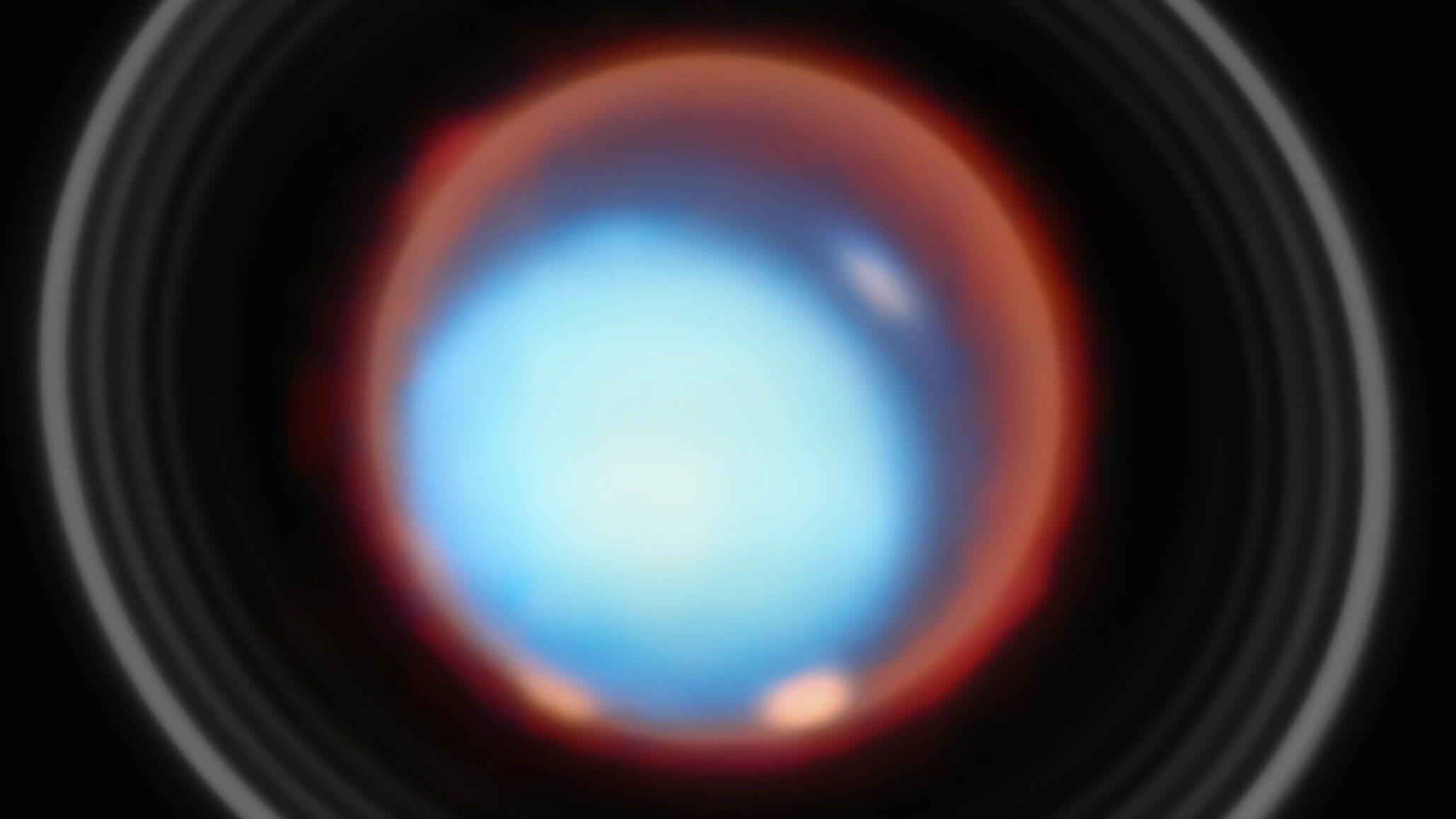
Scientists have mapped the upper atmosphere of Uranus in detail, revealing a cooler, thinner, and more unevenly charged layer around the planet than expected.
Using the James Webb Space Telescope, a joint observatory of NASA and its European and Canadian counterparts, researchers watched Uranus make nearly a full spin in space, capturing faint glows from molecules high above the clouds. The study resulted in an unprecedented timelapse video of nearly one full Uranian day, which can be watched further down in this story.
The infrared observations show that Uranus’ upper atmosphere, also known as its ionosphere, is not uniform. The research, which appears in the Geophysical Research Letters journal, centers on where the ice giant’s auroras form and how the planet’s oddly tilted magnetic field shapes them.
“This is the first time we’ve been able to see Uranus’ upper atmosphere in three dimensions,” said Paola Tiranti, lead author of the study from Northumbria University in the United Kingdom, in a statement. “With Webb’s sensitivity, we can trace how energy moves upward through the planet’s atmosphere and even see the influence of its lopsided magnetic field.”
Despite having the potential to shed light on how distant giant exoplanets interact with their space environment, Uranus’ charged upper layer is among the least understood in the solar system. Prior to the study, scientists relied heavily on indirect estimates.
The team tracked a faint infrared glow from a charged molecule called trihydrogen cation, which forms high above the planet where sunlight and space particles interact with the atmosphere. Because that glow changes with temperature and particle density, it lets scientists essentially scan the structure of Uranus’ ionosphere.
The data indicated the atmosphere is weaker than scientists had previously thought. It also confirmed that the upper atmosphere is relatively cool and seems to be continuing to drop in temperature. That’s a trend scientists have noticed over the past 30 years.
Because Uranus spins sideways, it has the most extreme seasons in the solar system. Its poles take turns facing the sun for 21 years straight, leaving the other half in a dark, two-decade winter.
“Uranus’ magnetosphere is one of the strangest in the Solar System,” said Tiranti, referring to the magnetic shield around the planet. “It’s tilted and offset from the planet’s rotation axis, which means its auroras sweep across the surface in complex ways.”
Researchers detected bright and dim auroral bands linked to the planet’s unusual magnetic field. Two bright ones glow near the poles, having similar patterns to those seen at Jupiter. The odd geometry of the layer likely channels energy unevenly into the atmosphere, creating patches with more or less charged activity, according to the study.
Before Webb looked at Uranus for the first time in 2023, most people’s notion of the seventh planet was not much more than a featureless blue ball, doing its own thing about 2 billion miles from Earth. That changed after the telescope revealed the planet’s strange vertical rings, bevy of moons, storms, and a polar cap.
With similar planets common around other stars, the researchers hope knowing how energy, temperature, and charged particles behave around Uranus will give scientists a real-world benchmark for interpreting those distant worlds.
Mashable