



A girl asks for Pluto to regain its planet status. NASA chief: Were looking into it.
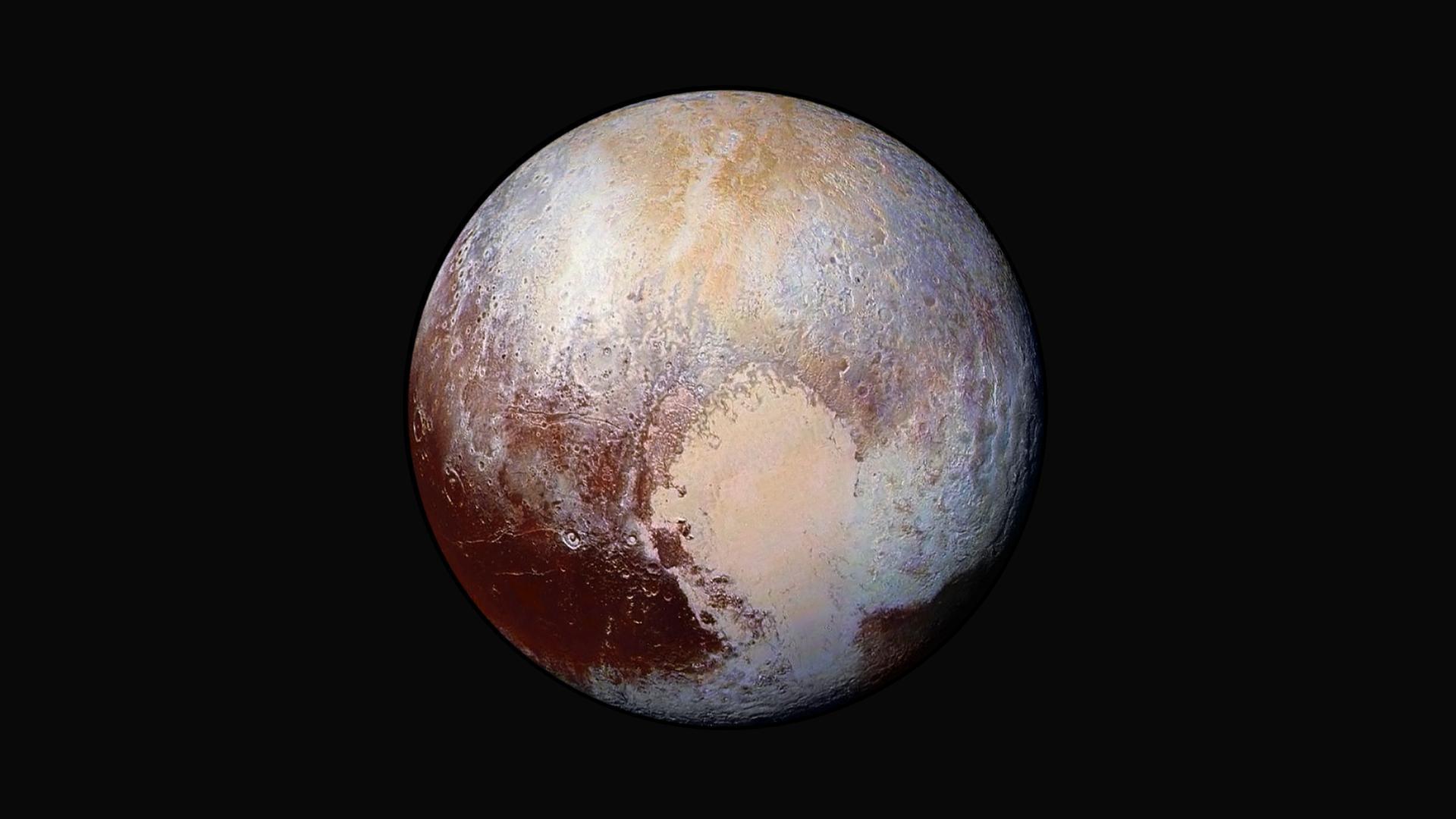
When 10-year-old Kaela Polkinghorn asked NASA to make Pluto a planet again, she never expected the agency’s top official to respond.
The fourth grader from Tampa, Florida, fell for Pluto during a field trip last week to the Museum of Science & Innovation, known as MOSI. In its giant dome theater, she watched a film that showed eight planets huddled cozily around the sun. But Pluto was not included in the group hug, crying from way in the back.
“It’s very small, and it’s so cute,” Kaela told Mashable, “like a little baby.”
That image tugged at her heartstrings. Later, Kaela sat down with some of her Plato Academy Tampa classmates and wrote a letter asking NASA to give Pluto its planet status back. Kaela’s mother, Brandy Polkinghorn, found the note.
Pluto’s place in the solar system has stirred strong feelings ever since 2006, when the International Astronomical Union — the global body that sets the nomenclature for planetary objects — voted to reclassify it as a “dwarf planet.” Under the organization’s rules, a planet must be round and also “clear its neighborhood,” meaning it dominates its orbit. Because Pluto did not meet that last criteria, the change cut the official list of planets from nine to eight, turning Pluto into a symbol of scientific debate.
Why Pluto has been such a touchy subject speaks to both nostalgia and national pride. Many people fondly remember learning acrostics, like My Very Educated Mother Just Served Us Nine Pizzas, for the nine planets of the solar system. In 1930, Clyde Tombaugh discovered Pluto from the Lowell Observatory in Flagstaff, Arizona, a historic moment for the grandparents of millennials and Generation X. Arizona’s attachment to Pluto even led Gov. Katie Hobbs to declare the icy world the official state planet in 2024.
At first, Kaela’s letter was only meant for NASA’s mailbox. Brandy and her husband, David Polkinghorn, both space and science fans, talked about where to send it. Then they showed it to a family friend, Mike Boylan, a Tampa-based weather personality with a large online following.
This Tweet is currently unavailable. It might be loading or has been removed.
“He had a hunch that maybe something would happen from it,” Polkinghorn said.
Once Boylan posted it publicly, things moved fast. Within hours, the NASA administrator replied to a photo of the letter on X.
“Kaela — ” Jared Isaacman wrote on April 9, just as the Artemis II moon mission was on its way back to Earth, “We are looking into this.”
NASA cannot overturn the International Astronomical Union’s decision on its own. But what the agency chooses to say about Pluto still matters, said Philip Metzger, a planetary physicist at the University of Central Florida, who has published two papers on the debate. Some scientists argue that Pluto counts as a planet because of its complex surface and active geology, even if it shares its region of space with many other icy bodies. If it’s scientifically useful for researchers to call it a planet, then they should, he says.
“NASA can help contribute to consensus that the IAU definition was inappropriate,” Metzger told Mashable in an email, “so it actually could be quite helpful for the administrator to take this on.”
Credit: Brandy Polkinghorn
The IAU has not heard from NASA or administrator Isaacman about Pluto, a spokesperson confirmed, while adding that the organization understands how emotional that 2006 decision remains.
“Scientific classifications are determined through international consensus and evidence-based processes,” the organization said in a statement to Mashable. “While they are not subject to unilateral change, they can be amended if the supporting evidence changes.”
But Isaacman’s comments weren’t a joke. NASA press secretary Bethany Stevens pointed to a Daily Mail article in March, in which the administrator said he fully supports restoring Pluto’s previous status as a planet.
For Kaela, the arguments take a simple form. She loves that Pluto is small and that photos from NASA’s New Horizons spacecraft show a bright heart-shaped region on its surface.
Science has long been part of Kaela’s upbringing. Before she was born, one of her parents’ first dates was at MOSI in 2004. The family can sometimes watch space launches from their neighborhood; they even saw the recent Artemis II launch light up the sky. Kaela’s younger brother, Austin Polkinghorn, is a big Elon Musk fan. And Kaela is daydreaming about her future career.
Credit: Brandy Polkinghorn
“I want to fly in a rocket,” she said.
Where does she want to go? Why, Pluto, of course.
Underneath her planetary plea is a desire for fairness. That core principle runs deep, evident in her request to include in this story the name of her friend, Zoey Mead, whom she credits as “the person who helped me most” with the letter.
Whatever happens next with Pluto’s label, one handwritten note from a 10-year-old has already accomplished something remarkable: It pushed a scientific debate from an elementary school field trip all the way to NASA’s top brass.
Mashable