October
01



A new NASA mission plan could capture light no space telescope now sees
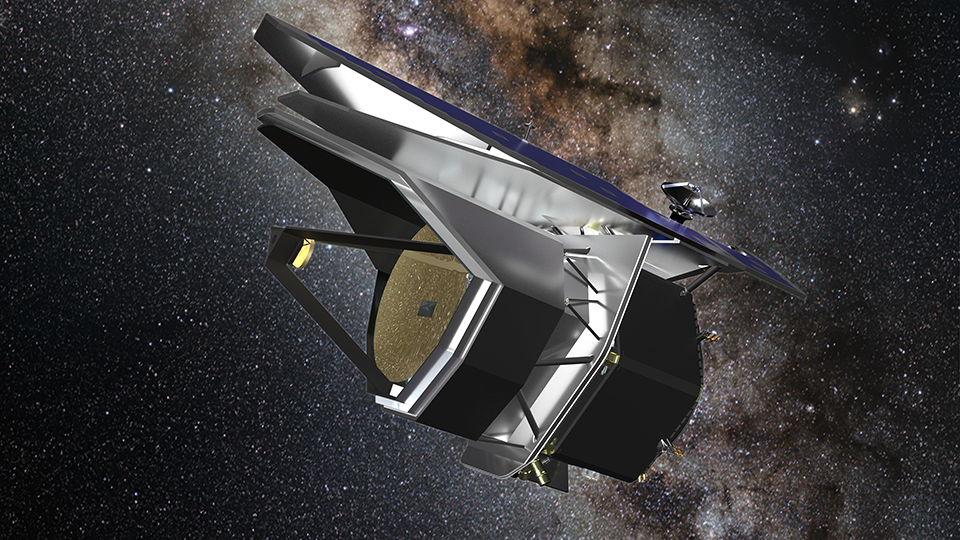
NASA will move ahead with a new space telescope to see the cold, dusty universe far more sharply than any before it, chasing clues about where planets get their water.
Engineers will now refine the design of the Probe Far-infrared Mission for Astrophysics operation and test its technology. Called Prima for short, the mission could launch in the early 2030s if it passes a final agency review.
Prima fills a blind spot in humanity’s view of space. Today, the James Webb Space Telescope captures stunning infrared images, and giant radio dishes on the ground pick up much longer, lower-energy signals. But no space telescope now watches the band of light between the two. With Prima, astronomers will have complete infrared coverage for the first time, said Alexandra Pope, who will lead the mission’s science team.
“With the launch of the James Webb Space Telescope almost five years ago, we’ve pushed our understanding of the universe,” said Pope, an astronomy professor at the University of Massachusetts, Amherst, in a statement. “But we’ve also uncovered all sorts of mysteries and questions that Webb can’t solve because it can’t see the far-infrared part of the spectrum. That’s where Prima comes in.”
Warm objects give off infrared light. Though human eyes can’t see it, people feel it as heat. Webb mostly sees the shorter infrared waves, but Prima will target the longer “far-infrared” waves, ranging from about one-third the thickness of a human hair to about the thickness of two stacked sheets of paper.
Cold gas and dust glow in that longer light, and that makes it valuable. Cosmic dust blocks ordinary light the way smoke can conceal the flames of a fire. But far-infrared light slips right through that dust, so astronomers can spot newborn stars, growing black holes, and planet-building material that would otherwise stay hidden.
Astronomers have tried to see this light before, but nature fights them. Water vapor in Earth’s air soaks up most far-infrared light, so telescopes on the ground catch only slivers of it. Anything warm also glows in infrared, including the telescope itself, and that glow drowns out faint signals from space. Europe’s Herschel space telescope and NASA’s SOFIA, a telescope that flew aboard a modified jumbo jet, both studied far-infrared light but are no longer in service. Since then, only instruments on high-flying balloons and mountaintops have glimpsed parts of this band.
Prima is expected to outperform its predecessors with an idea that started over coffee. In 1999, Caltech physicist Jonas Zmuidzinas and NASA Jet Propulsion Laboratory engineer Rick LeDuc sat in a Peet’s coffee shop near the Southern California campus and worked out how super-cold materials could detect far-infrared light. Over the next few years, they and their colleagues honed the design.
Prima’s 5.9-foot mirror and sensors will chill down to hundreds of degrees below freezing. That should make the telescope vastly more advanced.
“In this less-explored wavelength band, the far infrared, we have a chance to leap forward in sensitivity by about a factor of a 1,000,” Zmuidzinas said. “That’s very rare.”
Want more science and tech news delivered straight to your inbox? Sign up for Mashable’s Light Speed newsletter or get Mashable push alerts today.
Prima is a new kind of mission for NASA dubbed “Probe Explorers.” These missions fill the middle ground between NASA’s small, frequent science missions and its giant flagship observatories, such as Webb and the recently launched Nancy Grace Roman Space Telescope. A panel of top U.S. scientists recommended the category in 2020 so that NASA could have more big-impact science missions and at a lower price.
This Tweet is currently unavailable. It might be loading or has been removed.
NASA capped Prima’s budget at $1.2 billion, not including the actual rocket launch. That price tag runs a fraction of the roughly $10 billion the agency spent on Webb.
Prima’s science team will chase three big questions:
How do planets get their water and air? The observatory will study about 200 disks of gas and dust around young stars, where planets form. It will track where water sits and how it might reach planets that could support life.
How did galaxies and their giant black holes grow up together? Nearly every large galaxy holds a supermassive black hole at its center. Prima will look back to the universe’s busiest era, roughly 9 billion to 3 billion years ago, to learn how these pairs grow in step.
Where did the universe’s ingredients come from? The Big Bang produced mostly hydrogen and helium. Stars later forged carbon, oxygen, and other elements that life needs, and much of that material ended up as dust. Prima will study that dust to try to trace the story.
For now, Pope is preparing for the long haul. Her students will help to build the tools for analyzing the telescope data.
“We will have to staff up for this for the next decade,” she said. “We’ll add a few postdoctoral researchers and grad students, and I’ll be able to hire a small army of undergrads who can work on bite-sized pieces of the Prima science analysis.”
Mashable