

Cats: The Jellicle Ball review: Ballroom and Cats are a match made in the Heaviside Layer
Let the sound of clacking fans and roaring audiences lead you to Cats: The Jellicle Ball, a rapturous reinvention of Andrew Lloyd Webber’s Cats.
Now on Broadway after a 2024 run at PAC NYC, Cats: The Jellicle Ball transposes the often confounding pageantry of Cats to the ballroom scene, a haven for LGBTQ art and expression. The move breathes new life and meaning into Webber’s work, creating a joyful spectacle that is the only way I’ll accept Cats from now on.
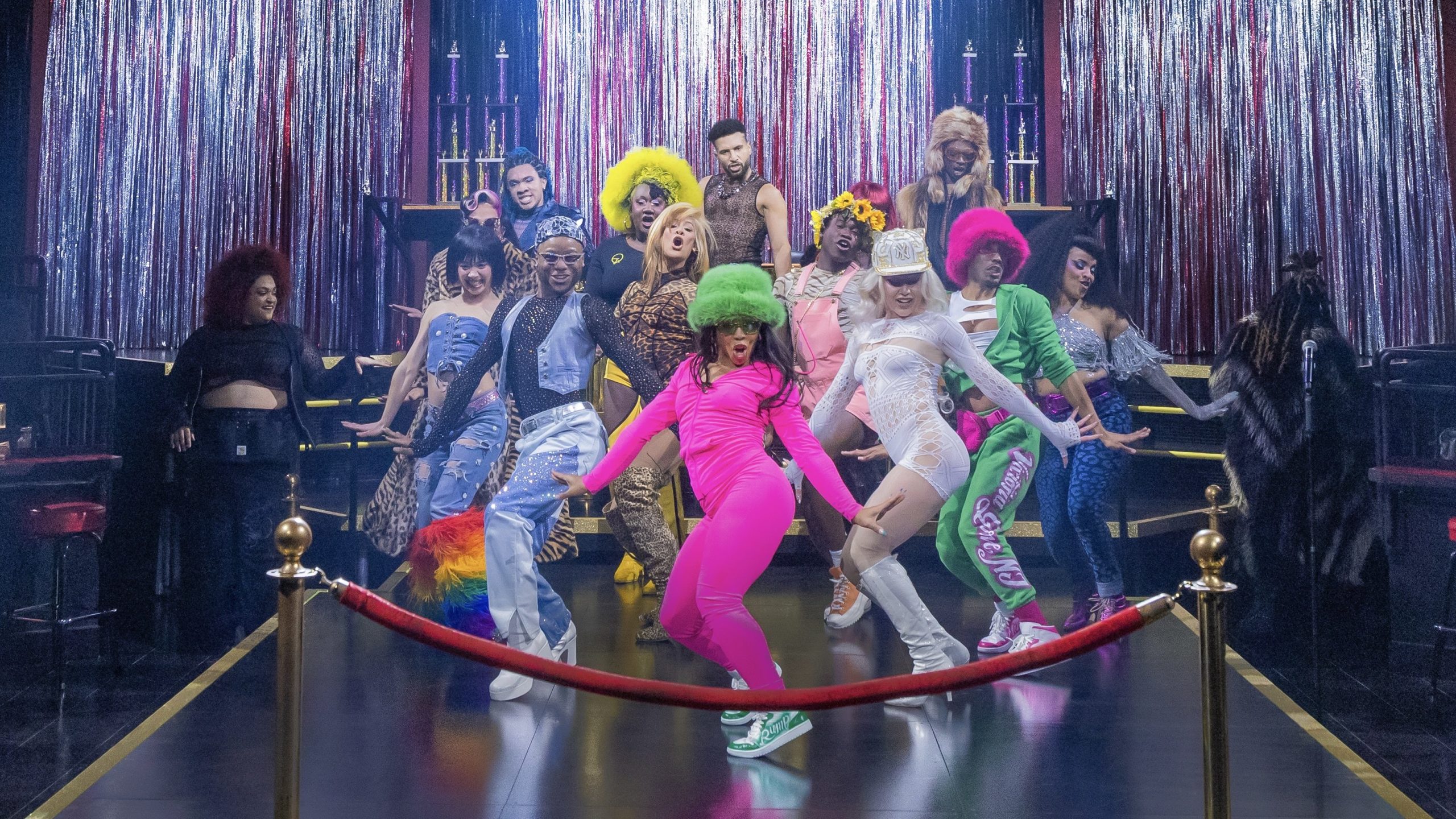
Cats: The Jellicle Ball brings ballroom culture to Andrew Lloyd Webber.
Credit: Matthew Murphy and Evan Zimmerman for MurphyMade
Despite its revamped title, Cats: The Jellicle Ball is still Cats. That means it’s still the story of the Jellicle Cats gathering for the Jellicle Ball, where the leader of their clan, Old Deuteronomy (André De Shields) will choose one cat to ascend to the Heaviside Layer and be reborn.
However, Cats: The Jellicle Ball zeroes in on the “ball” aspect of the original Cats, smartly tying the musical’s storyline to contemporary ballroom culture. Pioneered by Black and Latina trans women in the 1960s, but with origins dating back to the drag balls of the Harlem Renaissance, ballroom culture centers on competitive balls where attendees walk or perform in categories for prizes. Examples include “realness,” tied to a performer’s ability to “pass” as a cishet man, or “virgin vogue,” a category for newer dancers. Participants are often members of “houses,” which are part team, part chosen family.
All these elements map onto Cats: The Jellicle Ball eerily well, to the point that no part of the show’s recontextualization feels awkward or forced. In directors Zhailon Levingston and Bill Rauch’s vision, “Old Gumbie Cat” Jennyanydots (Xavier Reyes) becomes Mother of the Haus of Dots, whipping her house kittens into shape. The much lusted-after Rum Tum Tugger (Sydney James Harcourt) rules supreme in the realness category, while self-described “fat cat” Bustopher Jones (Nora Schell) rocks the body category. And yes, it all takes place on a catwalk. Here, each cat’s introduction is more than just a wave hello to the audience: It’s a full-on presentation to the Jellicle Ball’s judges.
The presentations themselves are jaw-dropping, full of gravity-defying moves courtesy of choreographers Omari Wiles and Arturo Lyons. Their choreography highlights the five elements of vogue, from dips and spins to mesmerizing hand and floor performances. A rousing take on “Skimbleshanks: The Railway Cat” even doubles as a lesson in the differences between Old Way and New Ways of voguing, charting the evolution of the art form.
Accentuating these looks further is the stunning costume, hair and wig, and makeup design by Qween Jean, Nikiya Mathis, and Rania Zohny, respectively. In Cats: The Jellicle Ball, performers’ looks aren’t as explicitly cat-like as those in the original production. You won’t find any furry bodysuits or painted-on whiskers here. Instead, the musical pulls inspiration from streetwear and couture alike, creating a colorful blend of styles while still nodding to the show’s source material with cat-eared hats, fur coats, or clawed boots. Like with Cats: The Jellicle Ball‘s dramaturgical shifts (Josephine Kearns served as dramaturg and gender consultant), each design choice cannily acknowledges Cats‘ past while pushing it into the future. That experience doesn’t even let up during intermission, during which you can hear banger remixes of songs from other Webber musicals.
Cats: The Jellicle Ball pays moving tribute to LGBTQ history.
Credit: Matthew Murphy and Evan Zimmerman for MurphyMade
Cats: The Jellicle Ball‘s new ballroom setting isn’t just an opportunity for the show to rain glitter and general fabulousness on the audience. (Although, trust me, there is plenty of that.) It’s also a tribute to the pioneers of ballroom culture, which has entered the mainstream thanks to documentaries like 1990’s Paris Is Burning, shows like Pose, and copious references everywhere from Madonna’s “Vogue” to RuPaul’s Drag Race. Ballroom slang like serving, eating, or clocking it has also become more widely used, if divorced from its original context. But over the course of the two hours you spend at Cats: The Jellicle Ball, the musical hopes to give audience members that context and honor it, too.
The biggest examples come at the beginning of the show’s second act, when Old Deuteronomy sings “The Moments of Happiness” to newcomer Sillabub (Teddy Wilson Jr.). As he reflects on the past, projections (courtesy of Brittany Bland) behind him display images of the Founding Mothers of ballroom, including Crystal LaBeija, whose image makes another cameo in the show. That thoughtful moment moves into Gus the Theatre Cat’s (Junior LaBeija) self-titled number, in which he regales the Jellicle kittens with tales of his work in the theater. In a vacuum, the song is still a moving remembrance of glory days gone by. But having LaBeija, the iconic emcee featured in Paris Is Burning, perform the song adds a whole new layer of meaning to it. This is a titan of ballroom passing the torch to a new generation and making sure they know their history. The relevance of that casting might not mean something to everyone in the Broadhurst Theatre, especially if Cats: The Jellicle Ball is their first exposure to ballroom. But for those in the know, the effect is endlessly powerful.
Cats: The Jellicle Ball also gestures to the trials and discrimination the LGBTQ community faces, artfully changing up Old Deuteronomy’s 11th-hour disappearance to involve a harrowing encounter with police. With that, “Magical Mister Mistoffelees” (Robert “Silk” Mason) becomes a rousing number of resistance and solidarity, albeit with some clever magical humor thrown in. It’s a euphoric sequence in a musical full of them. Old Deuteronomy’s introduction alone had the audience out of our seats and clacking our fans along for several minutes, overjoyed by the power of sick beats, dance moves, and De Shields boogieing up and down the catwalk. “Memory,” sung exceptionally by “Tempress” Chasity Moore’s Grizabella, brought the house down. And every runway showdown prompted gasps and approving clacks around the theater.
Would you find this level of collective joy at a more “traditional” Cats staging? I’m not sure. The show’s bizarre nature can be alienating, even off-putting. (Let’s not forget the horrors of 2019’s film adaptation.) Yet with its ballroom angle, Cats: The Jellicle Ball finds a clear focus for Webber’s polarizing show and turns it into a weird, wild celebration of an important subculture. Come one, come all, and get swept up in the magic.
Cats: The Jellicle Ball is now on Broadway.
Mashable