
ChatGPT wedding vows: Efficient or grotesque?
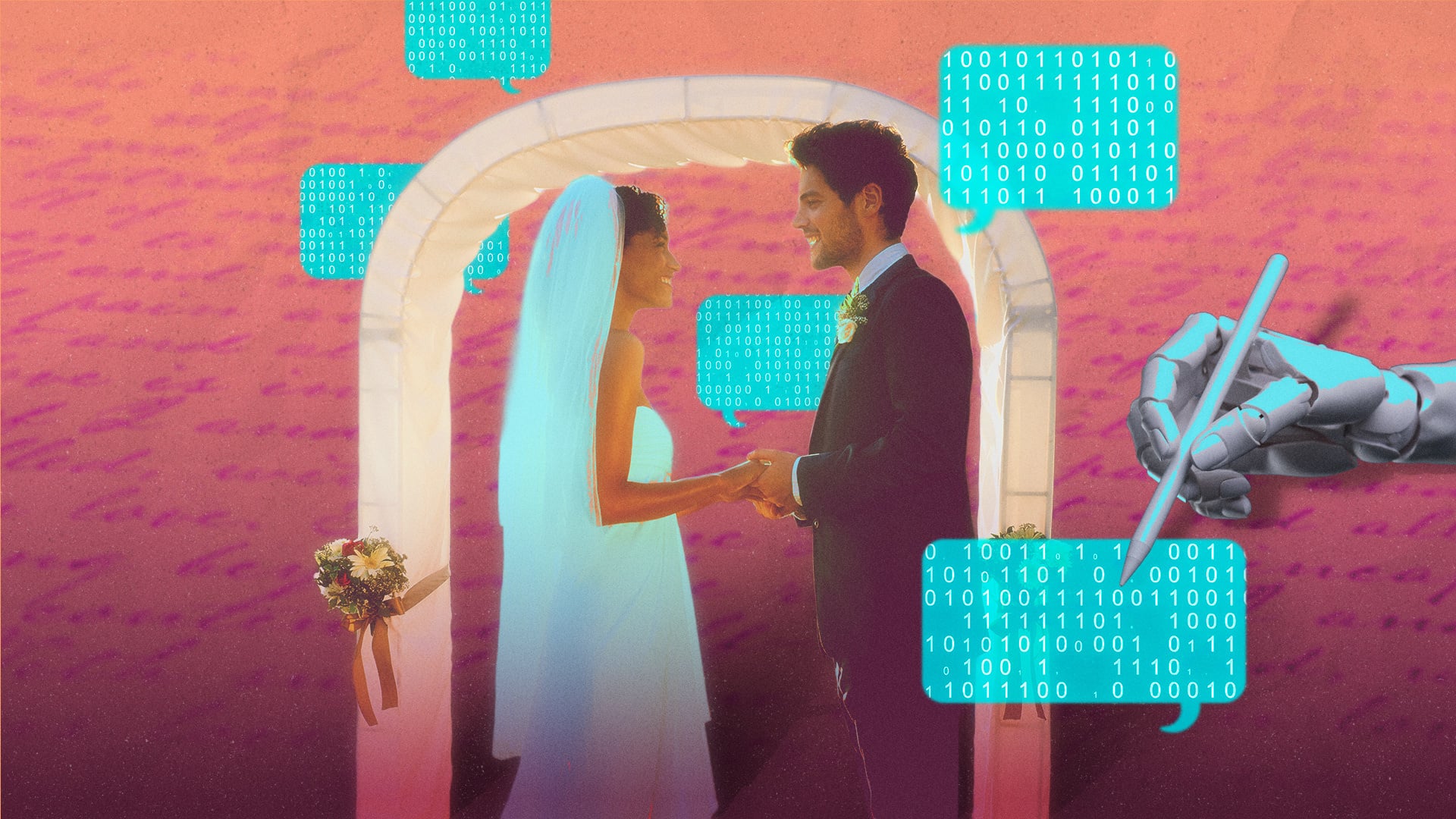
I got married recently, and — being a professional writer for years now — one of the tasks I looked forward to the most was writing my vows. My wife is also a writer, and I was even more excited to hear hers.
I wrote my vows on my own, and it never occurred to me to do them any other way. “Handwritten,” in 2026, takes on a new connotation: without AI, instead of written by hand. And I did “handwrite” my vows in both senses, first in my Notes app and then in a booklet my wife gifted me for the ceremony.
But some people don’t feel the same. Like flirting with a potential partner, fighting once they’re together, and wedding planning with AI, some betrothed people turn to LLMs to assist in writing their vows. Across social media, people talk about using AI platforms to write important messages. Seemingly, there are just as many people expressing disdain for the practice.
Chat, generate vows. Make no mistakes.
Bridal expert and founder of The Weddit, Catherine Geewax, has started noticing LLM-use in wedding speeches, while friends have heard it in vows. (The Weddit is a marketplace for everything but “the” dress — aka outfits for bridal showers, bachelorettes, rehearsal dinners, and the like.)
“Most wedding speeches, you can kind of tell, especially if you know the person, you know how that person speaks, you know their vernacular,” she told Mashable. But since ChatGPT entered the mainstream, she’s noticed that the structure of many wedding speeches sounds the same and feels less personal. And personality is her favorite part of wedding speeches.
Geewax’s heard fewer “little tidbits and stories of some funny thing they always do on a Saturday afternoon,” she said. “It started to just seem like it could apply to any couple or any best man or maid of honor.” She theorized that ChatGPT — or whatever LLM people might be using — is pulling from the same sources and spitting out similar speeches. (At the behest of my editor, I asked ChatGPT to “give me sources for good wedding vows.” It cited articles with tips for writing vows, as well as lists including actual vows, from sites like The Knot and Vogue. I then asked what writers to take inspiration from; the top three were Pablo Neruda, Mary Oliver, and Rainer Maria Rilke.)
Like flirting with a potential partner, fighting once they’re together, and wedding planning with AI, some betrothed people turn to LLMs to assist in writing their vows.
Even when she was writing her first speech since the dawn of LLMs, Geewax remembers thinking to herself, “Do not use AI. No matter how stuck you feel, no matter how stressed, lazy, like, because of the timeline, do not do it.” She did use ChatGPT to help keep her succinct, though. She had a strict three minutes and instructed the platform to keep it short without changing her voice or removing stories.
But this could be a reason to use AI, Los Angeles-based sex and couples therapist Ilana Grines told Mashable.
“Using AI to help you organize your thoughts? Awesome. Using AI to help shape the words in ways that genuinely help you feel like it represents the relationship? Cool,” she said. As long as you’re injecting the emotional texture of your relationship — the romantic, memorable things that you want to say to your partner.
AI lowers the pressure for people and gives them a starting point, Grines continued. “But don’t outsource it for the feelings, right?”
Featured Video For You
So why do AI vows seem so…icky?
My visceral reaction to using an LLM to generate vows is to recoil. I’m not the only one. A quick search on Reddit found that a man’s wife allegedly walked out after discovering he did just that. Another post asked how users feel about people using AI to write their vows was met with comments like, “That they don’t really care enough about the person to actually write how they feel.”
Grines takes a neutral stance on this issue, but said, “Talking about your feelings, that’s something that’s genuinely ours, and that’s not something LLMs can recreate.
“LLMs do such a great job at weaving together words, but they can’t illustrate the feelings that have catapulted the couple towards getting married.”
We as a society have a difficult time expressing emotions — and it seems that we’re moving further away from being able to access them, Grines continued, “because the reliance and outsourcing is unbelievably easy, and it’s such a frictionless experience.”
This apparent seamlessness may feel good in the moment, but some experts believe that more friction leads to more happiness and fulfillment. And when we use AI to solve our problems, it might lead to cognitive atrophy.
Vow-writing is supposed to be difficult, not something to hand over to a bot.
But if you’re upset with your partner for AI-generating their love letter to you, it’s probably not because you’re worried about their brain dulling. Grines also asked about what meaning we’d make out of our partner using an LLM for this purpose. It might signal a lack of reflection or investment.
Vow-writing is supposed to be difficult, not something to hand over to a bot. But delegating such a challenging task isn’t exactly new. Grines pointed out that, pre-AI, people still outsourced their vows, just in different ways: paid other people to write their vows, lifted them from movies, etc. So while the method is novel, the desire to eliminate friction isn’t.
Ultimately, a speech or vow isn’t about impressing anybody with “good” writing. It’s about expressing love. And, sure, you can use AI to trim, or to find redundancies, but — like someone you’re paying to jot down some sappy words — it can’t replicate how you feel.
Tips for “handwriting” speeches and vows
Everyone has their own process for writing speeches, especially when they’re this personal. For Geewax, when she’s a part of a friend’s wedding, she stores memories like any letter, note, card, or photo that friends have given her, and she usually starts by going through those. One friend she spoke to looked through old Facebook messages and album posts for inspiration.
“Start writing down the top memories, big and small, and go down memory lane,” she advised. Based on what she’s collecting, she’ll figure out the tone of the speech; she won’t force a certain tone if it doesn’t fit the relationship.
And, in the case of a speech, when bringing in the spouse, you may not know them as well, but you can think about how you met them and memories your loved one told you about them.
Then, she writes about the qualities of her friend getting married. Not just “nice” or “intelligent,” but specific ones. And she starts writing with a memory and lets it flow from there. She ties her words about the couple together with a memory of the three of them, and then closes the speech. While this is for a bridesmaid speech, you can make your own twist when writing vows.
If you have a hard time writing, that is not a reflection of how deeply you love someone, Grines said. But if you’re expressing yourself to your new spouse — whether in private or in front of your wedding guests — that emotional substance should come from you, not ChatGPT.
Want our dating and relationships stories and more in your inbox? Sign up for Mashable’s Top Stories newsletter or get Mashable push alerts today.
Disclosure: Ziff Davis, Mashable’s parent company, in April 2025 filed a lawsuit against OpenAI, alleging it infringed Ziff Davis copyrights in training and operating its AI systems.
Mashable