

Do we really need a foldable iPhone? Heck yes we do.
In January 2007, Steve Jobs took the stage at the Macworld convention at the Moscone Center in San Francisco to announce a new product category in Apple’s lineup: A phone.
Back then, PCs were a bigger deal than phones (hence the big Apple event of the year being the Macworld convention, which kept running until 2014). This would change soon. At that stage, Jobs announced a lofty goal. He’d be happy, he said, if Apple would capture 1 percent of the mobile phone market by the end of 2008, which would mean selling roughly 10 million iPhones in a year. Fast forward to today, and Apple sells that many iPhones, on average, roughly every two weeks.
Guess what Apple will release in September in our Big Guessing Game: Apple edition. Enter now for a chance to win!
The iPhone that Jobs held in front of the audience at Moscone was a lot smaller and a lot less powerful than modern smartphones, but its form factor has remained pretty much the same. It’s still a rectangular slab of glass, plastic, metal, and silicon with a large display on one side and almost no moving parts.
Credit: David Paul Morris / Getty Images
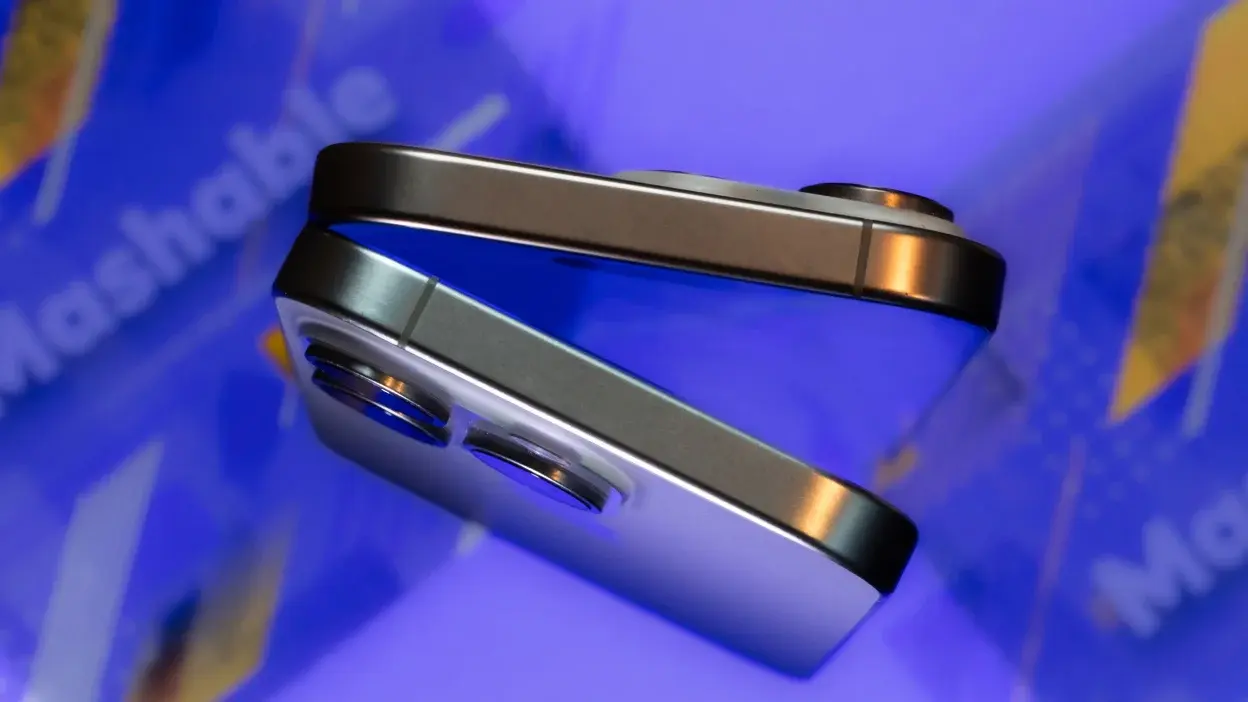
This is about to change. In September, according to numerous rumors and reports, Apple will launch the first-ever iPhone that’s not candy bar-shaped. Instead, the iPhone Ultra (or iPhone Fold, or whatever the name turns out to be) will be a foldable phone; a fairly regular-looking smartphone when folded, but with a large inner display that’s almost tablet-like when the phone is unfolded.
We’ve seen foldable phones before; Samsung has several in its lineup, which goes back six years, and so does Google, Motorola, and the major Chinese phone manufacturers. For Apple, however, it’s a pretty big leap forward that begs the question: Is this really something the world needs?
I think the answer is yes, but I also think Apple made the right move by waiting until the technology behind foldable phones matures. No one wants a phone with an ugly crease in the middle of the display, or a phone that creaks and cracks when you fold it shut. Often criticized for copying other phone makers, Apple plays the long game and waits until the tech matures. When you sell millions of phones every week, you want to get it perfect the first time around.
Still, many will shun the entire idea. By all accounts, the iPhone Ultra will be a pricy, hard-to-get, heavy phone that unfolds into an iPad mini. We don’t know Apple’s sales breakdown for tablets, but given the update frequency and the company’s marketing efforts, the iPad mini appears to be one of the least popular iPads. It also costs $599, while the iPhone Ultra is rumored to be nearly four times that price. So, who will pay north of two thousand dollars to have a beefier iPhone/iPad mini combo when you can buy a regular iPhone and a separate iPad mini for less money?
I don’t know how well the iPhone Ultra will sell. Perhaps it’ll end up being a side character in Apple’s lineup, just like the iPhone Air. But it will, I’m sure of it, be a lot sexier and cooler than having an iPhone in one hand and an iPad in the other.
The obvious benefit is having a regular-sized phone that expands into something that makes reading, watching movies, and even light work enjoyable on the go. If Apple gets the software part right, and there’s little reason to believe it won’t, the iPhone Ultra will be exactly this.
There’s also the (rumored) twist in Apple’s take on the foldable phone. It will be slightly wider than a regular phone, and thus open into an even wider device that actually makes more sense than most foldables on the market today. Samsung took the idea for a spin with its Samsung Galaxy Z Fold 8, and most reviewers seem to like it.
This Tweet is currently unavailable. It might be loading or has been removed.
Then there’s the software. The apps and games made for the iPhone have always had a very similar format. With the iPhone Ultra, app makers will finally be able to do something new and cool with their software. Besides the obvious, such as giving your favorite game more than twice the screen real estate, we’ll also see a bunch of productivity apps (finally, a big calendar!) and entertainment apps (a video side-by-side with your playlist in Music!) take advantage of the larger display.
Yes, Android foldables do have this to some extent, but there’s a lot of iPhone-only software out there that never got to do it. And given Apple’s massive footprint in the smartphone space, the iPhone Ultra might soon become the most popular foldable model out there, thus prompting app creators to try extra hard to accommodate the new form factor in their app.
Details aside, when was the last time you were truly excited about a new iPhone? The iPhone Air was a thin iPhone; while nice, it wasn’t exactly groundbreaking. But the iPhone Ultra should be the first truly different new iPhone Apple has ever made. That alone makes this one worth the wait.
Mashable