
Im tired of bi women being the internets Pride punching bag
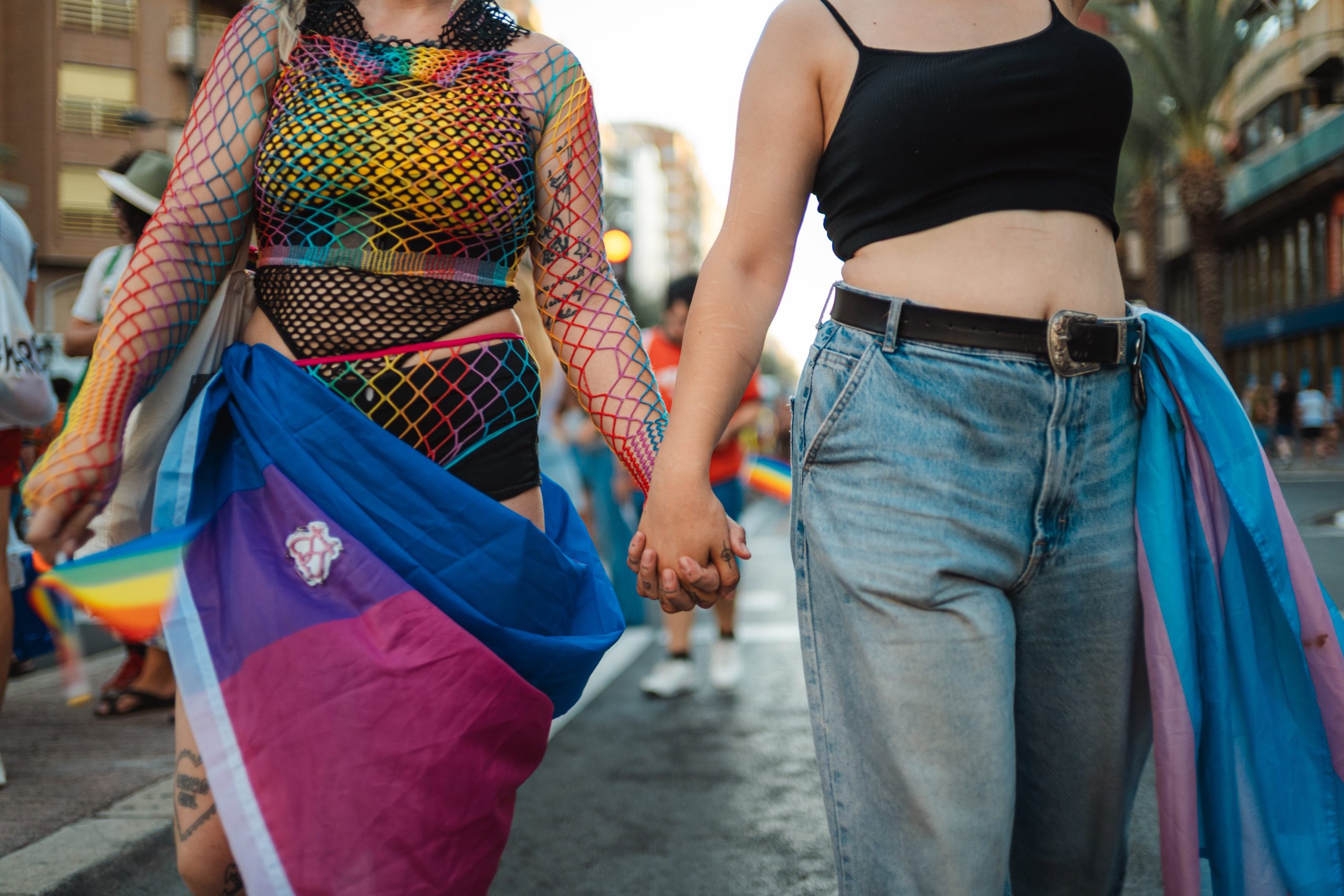
New Pride Month, same boring jokes about bisexual women.
Every year, wannabe comedians online take Pride Month as an opportunity to poke fun at bisexual women, especially those who are dating men. 2026 is no different:
This Tweet is currently unavailable. It might be loading or has been removed.
This Tweet is currently unavailable. It might be loading or has been removed.
This Tweet is currently unavailable. It might be loading or has been removed.
And this started before June 1, to be clear.
This Tweet is currently unavailable. It might be loading or has been removed.
As a bi woman, I clench every time Pride approaches because I know these jokes are coming. They’re not only tired at this point, but they also signal that stereotypes and stigmas about bisexual people haven’t changed. (And I’m a bi woman dating a lesbian, so I’m not even the butt of this particular joke, and I’m still sick of it.)
Before I go further, I want to make something clear: Bi people are not the most oppressed faction of the LGBTQ community. Without a doubt, trans people are being oppressed by the U.S. and other governments, and they need our support. Trans people’s existence is being threatened by legislation against gender affirming care, barriers to accurate IDs, freedom of speech, allowance in sports, bathrooms, and more. Not to mention all the transphobia that we see outside the government from everyday people. It’s disgusting, and it needs to stop.
Cis bisexual people are by no means experiencing this level of threat. I’m not trying to play the Oppression Olympics. But given these same jokes happen year over year, it’s past time we talk about it.
It’s also worth pointing out that there is a common thread between biphobia and transphobia, and it’s the human tendency — not speaking for everyone, obviously — to want to put everyone in a neat little box. To see everything in black and white. We as a species (and on the internet, especially) have trouble with the gray area of life, with nuance, with holding two things to be true at once. This is exemplified by both gender essentialism, or the belief that men and women have certain intrinsic characteristics, and biphobia, or the disdain for people who are attracted to more than one gender (or refusal to believe that’s true).
And maybe that’s why monosexual people (gay and straight people) can be hostile to us. At least, that’s one reason.
Misogyny also can’t be ignored here. All the jokes I’ve seen so far this Pride are specifically about bi women and ignore bi men entirely. When it comes to biphobia, the attraction to women is always what’s questioned, as bi women are assumed to be straight and bi men are assumed to be gay.
Harmful stereotypes against bi people
Certain stereotypes are unique to bisexual people: We’re greedy, we’re hypersexual, we’re cheaters, we’re going to leave someone for the other gender, that we’re faking for attention, and that bisexuality is a choice.
The sad reality is that these stereotypes don’t just lead to mean social media posts; they have real-life implications. As I’ve written about for Mashable, bi people’s mental health is impacted by this stigma, and bi people are more vulnerable to intimate partner violence. There are multiple factors that lead to this, from believing in the hypersexual myth, to wanting to “turn” women straight…
A famous example is Amber Heard and Johnny Depp. In 2022, after the infamous Depp v Heard trial concluded, Rebecca Bodenheimer wrote for the LGBTQ outlet Them.:
When psychologist Dawn Hughes took the stand during the defamation trial initiated by Johnny Depp against his ex-wife Amber Heard, she testified to the court that Heard’s bisexuality was a point of contention during the actors’ tumultuous marriage. Hughes gave examples: Heard had “faced scrutiny” in her interactions with women and, on one occasion, Depp allegedly “manually penetrated” her in anger after he saw Heard have an exchange with another woman.
Bodenheimer went on to say that, “[Heard’s] bisexuality was weaponized against her during her 2016 divorce from Depp, with media suggesting she was untrustworthy and had cheated on him due to her sexuality.”
“On social media, supporters of Depp used hashtags like #AmberHeardIsAPsychopath, #AmberHeardIsALiar, and #AmberHeardIsASlut — all sentiments that mirror some of the many stereotypes and stigmas that bisexual people still face,” Bodenheimer wrote.
We must recognize the harm that could stem from the same biphobia that leads to little jokes on the internet. I’ve never experienced what Heard has, but I’ve run into my share of biphobia.
In 2019, years before I met my fiancée, I attended a sapphic speed-dating event. I had a great time, but then at the end, before there was supposed to be an afterparty at another location, I was in line for the bathroom when I overheard someone say that she’d never date a bi woman. And I was so hurt by this that I just left. I didn’t go to the second location. I didn’t even go to the bathroom. I didn’t say anything, either, so who knows if this woman found out that she upset me.
I understand that that woman might’ve had her own negative experiences with bi women that led her to say that. But like any group, bi people aren’t a monolith. Instead of treating us as individuals, she wrote us off altogether. Or, perhaps worse, she didn’t even base her preference on her past, and just judged bisexual women for dating/sleeping with men, or some other biphobic tick.
If I had to give my 2019 self advice, I’d tell her to just go to the afterparty and not let that person get to me. (But in the end, it didn’t matter; I met the love of my life a couple of years later.)
Bi folks, we are a little annoying
As a bi person myself, however, I can admit we can be a little annoying. We are the “but, actually…” of the queer community — but with good reason.
As bisexual writer Zachary Zane has written about in his memoir, Boyslut, and in Men’s Health, bisexual “visibility” can be difficult. In theory, you’d need to be holding hands (or making out with) two different-gendered people simultaneously. And if you’re in a monogamous relationship, that’s not happening.
What Zane advocates for is bisexual audibility, which is the practice of coming out as bisexual.
If you’re assuming someone’s gay or straight and they tell you you’re wrong, you can perceive them as being obnoxious. It’s indeed annoying to be wrong and to be told you’re wrong. But for many bisexual people, saying so is the only way they can let it be known.
I don’t think it’s necessary to tell people they’re wrong about you in every context. I also know there are times when we need to assert ourselves and our place in the LGBTQ community. We’re here, queer, get used to it, etc.
Bisexual people may be the “but actually” of the queer community, but we’re also the “yes, and,” and I love that for us. We live in the gray area, the nuance. It’s OK if you’re not visibly bi all the time, and it’s also OK if you’re in a straight-passing relationship.
Maybe next year, we’ll be writing the jokes.
Mashable