
‘Profoundly corrupt’: The EU’s leading FIFA critic sharpens his attack
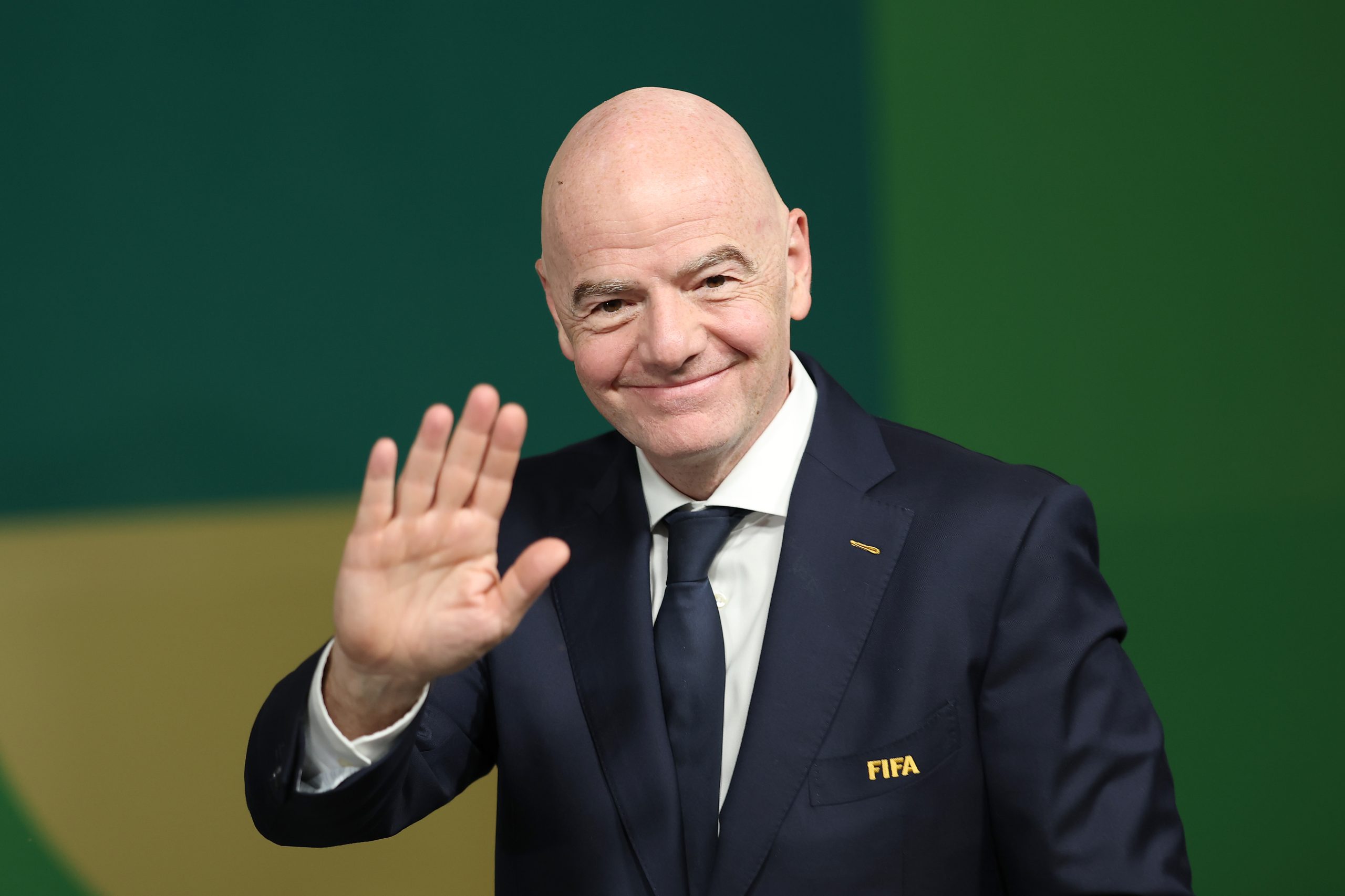
FIFA’s leading critic in the European Parliament told POLITICO that the decision to lift a key American player’s one-game suspension was the latest example of an “unbroken pattern” of nontransparent governance in world football’s governing body.
Last week, centrist Irish MEP Barry Andrews penned a letter urging FIFA to investigate its president, Gianni Infantino, over four public statements he made in support of U.S. President Donald Trump last year, which allegedly undermined the body’s political neutrality.
On Monday, after FIFA lifted the ban on American striker Folarin Balogun following a call from Trump to Infantino, POLITICO sat down with Andrews to discuss how the governing body’s latest decision adds fuel to his criticism.
FIFA did not immediately respond to a request for comment about Andrews’ latest rebuke, but Infantino released a statement Monday denying allegations that he influenced the decision to lift Balogun’s suspension.
The interview has been edited for length and clarity.
What was your first reaction when you heard the news that Trump had got involved in Balogun’s case?
It confirms, in my view, that FIFA is a profoundly corrupt organization. Unfortunately, there’s a decadeslong litany of examples of how FIFA has corrupted sport at the highest level. It’s just a further chapter in that litany, unfortunately, and we need to figure out ways to try to put pressure on FIFA to reverse this decision.
MEP Petras Auštrevičius told POLITICO on Friday that FIFA is “not any longer a neutral sports organization.” Do you agree?
Is it not really a lawless organization? The decisions around awarding the World Cup to Qatar and Russia have been demonstrated to be the subject of massive bribery of officials in the executive committee of FIFA and also the confederations across the world. So, unfortunately, what we’re seeing with the recent example of Infantino just proves that this is an unbroken pattern over many decades. When Sepp Blatter was [FIFA president], he had no restraint on his politicization of the role, but Infantino, if it’s possible, is worse.
Blatter said this morning that “football must never become a playground for political power.”
If Blatter thinks it’s corrupt, we’re dealing with towering levels of malpractice.
What do you think the European response should be here?
There’s a lot of people who say “politics and sport don’t mix,” but we’re dealing with an organization that is so powerful. Therefore, we should make a very clear statement on it. There’s a limit on what we can do, but I think we have to be very explicit on denouncing what has happened in this situation since Sunday.
Are you going to be watching the U.S.-Belgium game tonight?
I’ll be watching it. I’m disappointed with everything about the way the U.S. has [conducted the World Cup]. It’s not the fault of the U.S. players, but you just can’t help yourself. You couldn’t imagine what would happen if the U.S. won the tournament.
Politics