

Worlds largest digital camera stuns with Ocean of Stars image
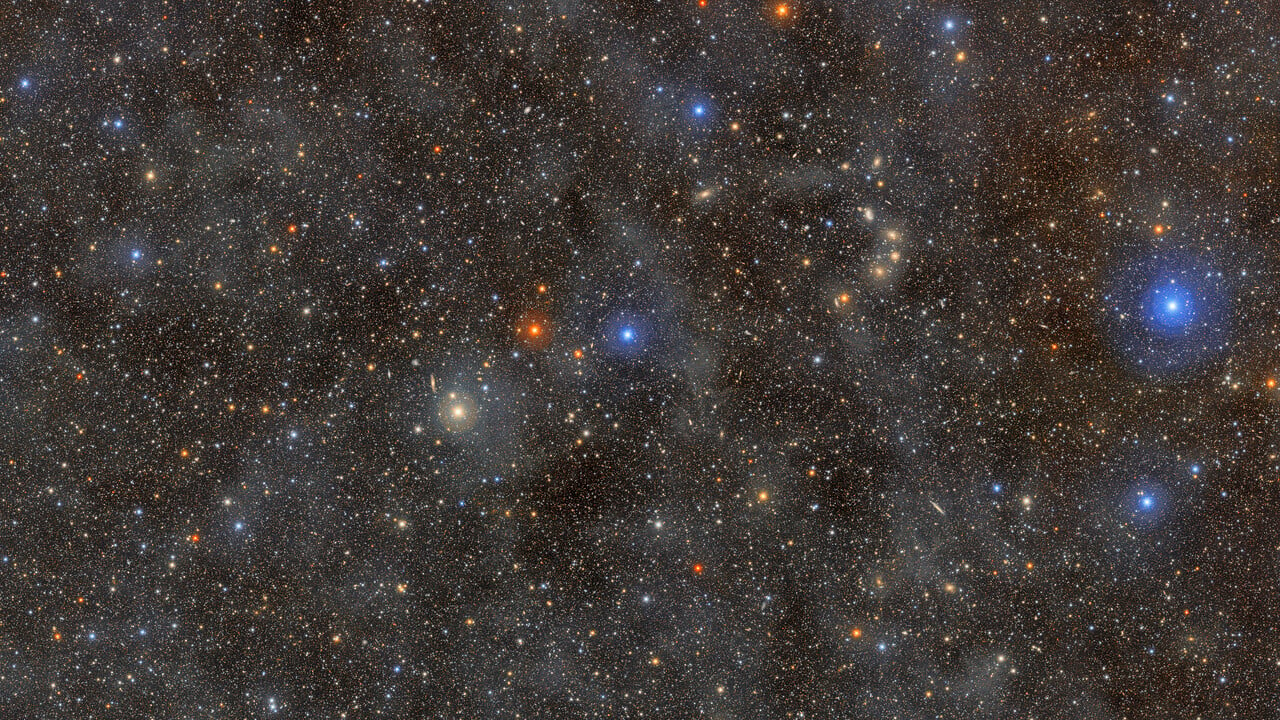
Millions of stars, smears of dust, and even background galaxies pack this image, the first major Milky Way view from the Vera C. Rubin Observatory in northern Chile.
The picture, fittingly dubbed Ocean of Stars, marks the beginning of Rubin’s 10-year Legacy Survey of Space and Time. It’s a preview of what the observatory’s Simonyi Survey Telescope will do over the next decade: snap the same crowded star fields every few nights so astronomers can play one epic game of Spot the Difference.
Together those space images will form a detailed timelapse video of the visible southern sky.
“It’s taken 20 years of hard science, engineering, and more to get to the point where we can call ‘action’ as we start rolling on this blockbuster movie of the universe,” said Phil Marshall, deputy director of Rubin’s operations, in a statement. “Millions of alerts in just the last couple of months show that Rubin is up and running as a discovery machine.”
By “alerts,” Marshall is referring to the roughly 7 million notifications the observatory sends out about things that have changed in the sky each night. Those messages flood alert brokers — systems programmed to sort and classify the information for scientists.
Rubin, built by the U.S. National Science Foundation and the Department of Energy, stands on Cerro Pachón, a desert peak high in the Chilean Andes, where the air is clear, dry, and steady. It takes its name from astronomer Vera Rubin, whose work revealed some of the first strong evidence for “dark matter” — an invisible, abundant substance in space that does not give off or interact with light.
Credit: NSF–DOE Rubin Observatory / NOIRLab / SLAC / AURA
Ocean of Stars points toward the constellation Lupus, close to the crowded plane of the Milky Way. When you zoom in, sharp points of color — blue, white, and red — emerge from the haze. Rubin’s 3,200‑megapixel camera, the largest on Earth, uses six filters to capture these different shades of light.
Bluer stars tend to be hotter, heavier, and younger. Redder stars are usually cooler, lighter, and older. By reading those colors across images like this one, astronomers can estimate when different parts of the Milky Way formed.
The scale is positively enormous. Rubin will create a new, detailed image every 40 seconds. Over the course of the survey, it’ll probably lay its eye on 17 billion Milky Way stars. Each night, Rubin will collect about 10 terabytes of data — roughly as much as you can store on 10 high‑capacity smartphones.
Many of those sit in jammed regions like the one featured in Ocean of Stars, where older telescopes have either failed or struggled to separate one star from the next. Rubin’s sharp vision and image processing mean scientists can tease out faint light and turn what once looked like a haze into a clean star‑by‑star census.
Credit: NSF–DOE Rubin Observatory / NOIRLab / SLAC / AURA
And this is just one frame. Rubin will revisit each patch roughly 800 times throughout the survey. Scientists expect to see stars pulse, dim, or drift; catch new supernova explosions as they flare; and trace the comings and goings of asteroids.
For now, Ocean of Stars is an excuse to literally stare off into space. The observatory has released a navigation tool that will help you get lost in the detail.
Mashable